

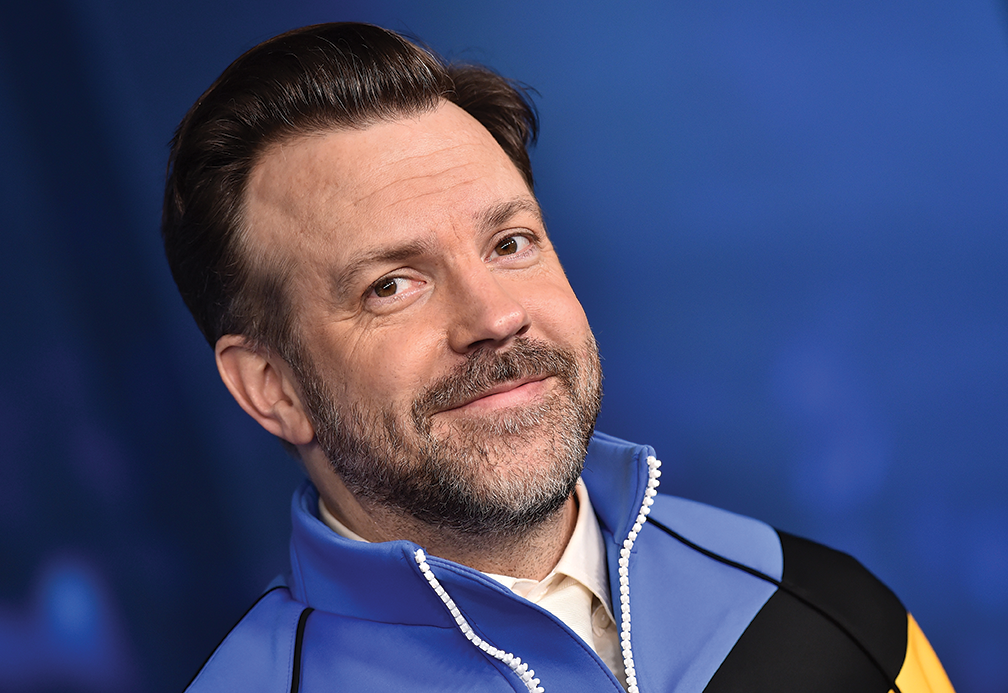
A few years ago, I made everyone I know a goldfish ornament. A clear ornament ball, some indigo sand, and a plastic goldfish. I’d recently discovered that the goldfish is the happiest animal on earth. Apparently, it has a five-second memory. I learned that from “Ted Lasso.” I had been glued to Season 1 with a glass of wine in one hand and a notebook in the other.
I’ve been laboring to be a great boss for several decades, so when I find someone who seems to have it figured out, I sit up. I like Ted. He has seemingly unlimited patience, chooses curiosity over criticism, and cares more about the success of each person than the success of the business. All things I want to do but typically fall a bit short.
Watching the show got me thinking. What if your boss isn’t Ted Lasso? What if your boss is just a regular person without all the answers who is trying to do their best? Most leadership advice is directed at the boss. Be a better communicator. Give regular feedback. Develop your people. Listen more. Talk less.
All good advice. But what if your boss hasn’t read the books? What if they’re too busy, uncomfortable giving feedback, or simply don’t know how to help you grow? Are you supposed to sit around and wait for them to figure it out?
Let me tell you about Sam.
The Lizard Sitter
I hired Sam as a favor to a friend. I owed this friend a debt, and he saw a spark in Sam, who was the pet sitter for his kid’s lizard. Not only did Sam check on the lizard daily, but she also brought in extra leafy greens without being asked. My friend, a famous Silicon Valley guru, took notice of Sam’s efforts and asked me to consider her for my early startup venture.
Sam interviewed as any thoughtful lizard caregiver would. I found out she had other skills, too, like leading events and tending bar. She had zero experience in startups, which was good because neither did I.
I hired her on the spot, telling her to show up the next day and we’d figure something out. After a few months, Sam was rolling at full speed, plugging holes, rounding up loose ends, and helping us think of ways to engage our customers.
But she also started doing a few things to help me become a better boss. Here are four things Sam did that every employee could learn from.
1. She Put Her Own Performance Review on the Calendar
As a boss, I loathe the employee review process. And if it wasn’t bad enough, the industry recommendation escalated from annual to every six months. It’s no fun giving chunks of feedback that I should have been giving all along in small doses. I’d rather spay a big fat Lab every day for the rest of my life.
Until Sam, every employee I’d had would sit around waiting for me to announce it was time for reviews. If I procrastinated for months, no one said a thing. I got the feeling they didn’t care about them either. I couldn’t have been more wrong.
About a month before her first annual review date, Sam did something so peculiar that I nearly fell out of my chair. She sent me an email telling me how excited she was for her upcoming performance meeting and suggested a date to be put on the calendar. And to ice the cake, she provided a list of discussion topics. There wasn’t any asking or “I’m sorry to be a bother but” gibberish. Just a nudge letting me know that it was time for me to do my job.
What I eventually realized was that all of my employees were awaiting their performance reviews. They wanted to know how they were doing. They wanted feedback. And they especially wanted clarity on what they needed to do to earn more money. Sam was putting into words what everyone else was thinking.
This was a pretty important lesson for me. Just because your employees aren’t asking for something doesn’t mean they don’t want it.
And if you’re an employee waiting for your boss to schedule that conversation, consider sending that email and requesting the meeting yourself. Show up with a list of questions. Make it easy for your boss to help you.
2. She Told Me What She Wanted
Sam spoke frequently about how she wanted to grow, learn, and be challenged. I knew that because she told me in plain English that she wasn’t a status-quo kind of gal. She didn’t have a career path identified yet; she was struggling with that. But she knew she wanted to continue to push herself and desired specific feedback. She’d ask me terrifying point-blank questions like:
- What do I need to work on to move to the next level?
- What do you see as my strengths?
- Can you help me overcome some of my weak spots?
I barely had answers to these questions for myself, let alone someone else. But at least I knew what she needed from me if I wanted to keep a top-shelf employee around.
Think about how often we expect our bosses to recognize our potential, identify our career goals, and figure out what will make us happy. That’s a pretty tall order, especially when we haven’t figured those things out ourselves.
Sam didn’t expect me to read her mind or wave my wand. She did something unexpected — she told me what she needed.
3. She Didn’t Expect Me to Have All the Answers
I had no idea how to career-coach Sam, and I think she eventually realized that. One day, she announced that she’d engaged a career coach. She wanted me to know she was meeting with someone regularly and digging deeper into figuring out what type of work fueled her.
Through that work, she discovered she had a knack for data analytics. She took that information and ran with it. While she was still working for me, she began studying to become a Salesforce administrator. When my company was acquired by Vetsource, Sam moved up within the parent company, earned her Salesforce administrator certification, and eventually became an IT business analyst, the position she holds today.
Talk about taking the horse by the reins. The person I hired because she took exceptional care of a lizard found a career in information technology. And it wasn’t because I had some brilliant development plan for her. I didn’t. She figured out where she wanted to go and found the resources to help her get there.
Your boss might be great at running a veterinary hospital but terrible at career coaching. Maybe they’re a fantastic surgeon but have no idea how to help you develop your leadership skills. That doesn’t mean your development has to stop.
Find a mentor. Take a course. Hire a coach. Talk to people doing jobs that interest you. Your boss can be part of your career development without being responsible for all of it.
4. She Built a Relationship With Me
Sam didn’t treat me like an unapproachable boss. She didn’t stop talking when I walked into the room. She recognized that I was more than a boss. I was a person struggling, just like her, to be the best version of myself. She’d share podcasts and books with me. She found things we were both interested in. She started a bookshelf for the team with our favorite leadership books.
It was like she wanted all of us to get better, not just herself.
When she put her review on my calendar, she wasn’t criticizing me for procrastinating. She was helping me get it done. When she asked for specific feedback, she wasn’t accusing me of being a lousy communicator. She was showing me how to communicate with her. And when she hired a career coach, she wasn’t telling me I was incapable of developing her. She was taking responsibility for finding the help she needed.
Your Boss Is Human, Too
Now, before you start thinking that I’m suggesting employees should be responsible for turning lousy bosses into great ones, I’m not. If your boss is abusive, dishonest, or unwilling to listen, no amount of calendar invitations or leadership podcasts will fix that.
I’m talking about the rest of us. The bosses who are trying but sometimes get buried in the day-to-day demands of running a business. The ones who care about their people but aren’t particularly skilled at developing them. The ones who could use a little help.
In veterinary medicine, it’s not uncommon for a talented veterinarian or technician to find themselves in a leadership position. One day you’re taking care of patients, and the next you’re responsible for performance reviews, career development, and helping people navigate their professional lives. There’s a pretty big difference between knowing how to manage a diabetic cat and knowing how to manage a team of humans.
And some of us are still figuring it out. The funny thing is, I thought I was doing a friend a favor by hiring Sam. But Sam did me a favor. She helped me become a little bit more like Ted Lasso.
DFree/shutterstock