
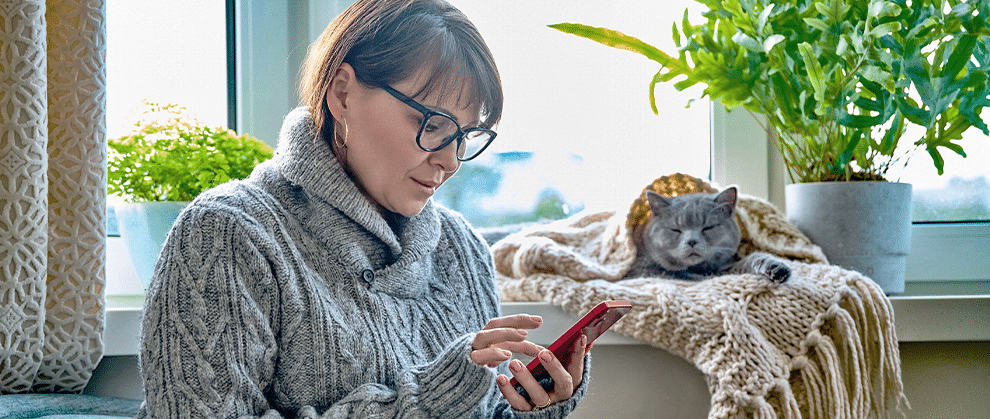
My mom recently got sick, and oh, what a joy it has been to accompany an elderly person through the fragmentation, impersonalization, and inefficiency of the United States health care system. After more than a dozen visits to various specialists, the Santi family can all agree: Our favorite health care provider is ChatGPT.
There are several key areas where generative artificial intelligence — think ChatGPT, Claude, or Gemini — outperforms the doctor:
- It explains things in plain English.
- It makes space for hope — and for fear.
- It backs it up with data.
- It connects the dots and explains the big picture.
- It’s endlessly patient.
- It never rushes to the next room after 15 minutes.
All of this got me wondering: If we like AI more than our human doctor, could pet owners be feeling the same way about us? Could the veterinarian’s job be at risk? Yes, and yes. If we’re trying to compete with ChatGPT at being ChatGPT, we’re going to lose. But maybe that’s not the game we should be playing. Maybe it’s time to start thinking about how to become irreplaceable in the places where AI can’t compete.
What Makes You Irreplaceable
Become the person they trust, not just a service they use.
My dad used to tell me that trust is earned in inches and lost in seconds. He was right. When you think about building trust with a client during an annual visit, it becomes clear pretty quickly that this is not something you can leave to chance. It needs to be approached with the same intention you bring to surgery: a step-by-step sequence that you practice over and over until it becomes second nature.
Trust boils down to three C’s: competence, communication, and connection. Competence gets you in the door, communication keeps you there, and connection makes you irreplaceable.
Your veterinary training, mentorship, colleagues, and continuing education earn you the competence badge. And whether you feel confident about your skills or not, most clients do not see those nuances. To them, a vet is a vet, at least at first. Much like in human medicine, they assume a baseline level of competence across the profession. That means competence alone is rarely what sets you apart.
Communication is where the separation starts. It’s also one of the hardest skills to master. Good communication takes practice, repetition, and intention. If this is an area you struggle with, start here. Good communicators aren’t born, they’re built.
When it comes to being truly irreplaceable, connection is everything. A few years into my first job at a 24-hour practice in Portland, Oregon, I switched to the night shift — 9 p.m. to 7 a.m. I didn’t think it would affect my clients. There were 13 doctors at the practice. Surely no one would notice. I was wrong.
Much to my boss’s surprise — and definitely mine — the first two hours of my shift started filling up with my regular day-shift clients.
Health exams. Itchy ears. Vaccine appointments.
At 10 p.m. on a Saturday night.
What in the world?
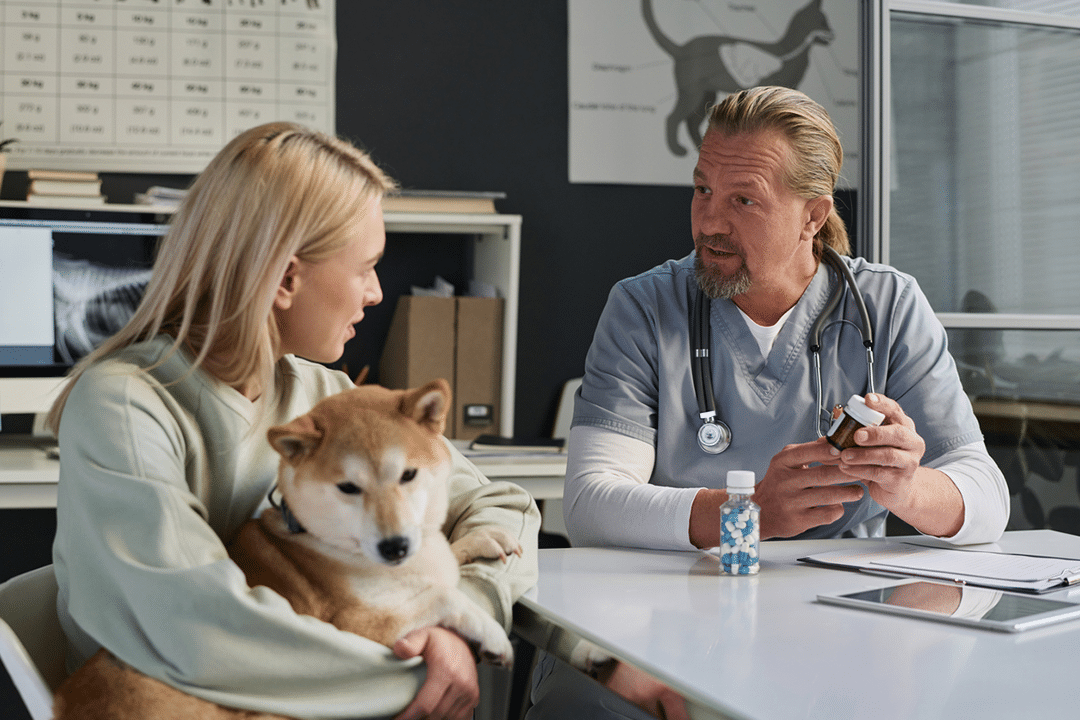
I didn’t appreciate it at the time, but I had connected with certain clients, and that made me worth the inconvenience of coming in at night. This is the kind of bond that makes you irreplaceable: the human-to-human, “I sincerely care about you” bond. And, it’s the kind of bond that AI can’t touch, no matter how fast, convenient, or cost-effective it becomes.
istockphoto.com/AnnaStills
Collaborate With AI
Use AI to strengthen your communication skills. Run your medical explanations through it, and then simplify the output with another prompt:
- “Explain this at an 8th-grade level.”
- “Give me a simpler way to say this.”
Pay attention to the wording. Notice how it reframes things, the examples it uses, and how it organizes the message. Over time, you’ll start to communicate more clearly in the exam room, and you’ll find that your clients listen better, accept more of your recommendations, and find peace with the hard parts of being a pet owner.
AI comes in handy in other places, too. I’ve been using it for my email responses. I’ll be the first to admit, I’m a pretty straight shooter when it comes to telling it like it is. But sometimes that doesn’t land the way I intend. I know I should soften it a bit, but I don’t know exactly how. So, I run my email replies through ChatGPT before I hit send. I’m consistently surprised at how a few small changes in wording and flow can make the message land so much better without changing what I’m trying to say.
Use AI as a Second Set of Eyes (Not a Decision-Maker)
One of the scariest parts of being a veterinarian is the constant fear that you’re missing something. A diagnosis. A detail. A treatment option. Or that moment when you’re staring at an X-ray thinking, do I cut or not?
I used to have recurring nightmares that I forgot how to neuter a cat, so I just went home and left him on the table overnight, only to find him waiting for me the next morning. This is the kind of stress we carry. It’s not easy being in charge of important things like how to manage a diabetic ketoacidosis case or how to get a cat’s head out of a mayonnaise jar. We’re fortunate now to have an on-site collaborator with us for each appointment.
Leverage AI to help you catch what you might be missing or, if nothing else, to pat you on the back so you can actually sleep tonight. Currently, you can copy and paste test results directly into AI and get an immediate interpretation. The answer isn’t always correct, so take what you get with a grain of salt, but it’s getting stronger, more powerful, and more accurate every day.
Use AI to Strengthen the Partnership
A big part of connecting with pet owners is helping them improve their pet’s life and longevity. That only works if you’re truly in a partnership. You hold the keys to the knowledge, but they have to make it happen when they leave the clinic. For that partnership to work — and for the pet to get the outcome you both want — owners have to:
- Understand what they’re supposed to do.
- Understand why it’s important.
- Be able to perform the task.
I spent a lot of time wondering why some clients didn’t follow through on my recommendations. In the exam room, I thought we were aligned. I spoke clearly, used simple terms, explained the “why,” and even had them repeat it back to me.
Then they’d come back two weeks later with only half the plan done. It didn’t make sense. Why were we not on the same page?
My success as a veterinarian depended on my clients executing our agreed-upon plan, like giving the heartworm medication, getting the cat to eat the special food, or keeping the bandage dry.
One day, I learned an alarming stat: Humans forget 50% of information they’re told within one hour and up to 90% of that information within a week. Suddenly, it all made sense. Robust discharge instructions and client education are essential. But who has time for this? I never did. I’d start each day doing well, but by mid-morning, after squeezing in my third work-in, I’d start to slip and go back to verbal instructions, basic handouts, and a couple of key points jotted on the invoice.
That’s where AI changes the game. You can take your SOAP notes — your shorthand, medical, barely-legible-to-anyone-else notes — and turn them into a clear, customized, easy-to-follow plan in seconds.
Try something like, “Create an easy-to-read, bullet point handout for this client based on my medical notes. The owner is worried, and I’m not sure they’re hearing what I’m saying.” Then paste in your notes. What comes out is often better than what most of us have time to write on our best day.
Become an AI-Proof DVM
A recent tech insider article warned that AI is coming for jobs like legal work, financial analysis, software engineering, medical analysis, and customer service. The Hill reported that 80% of Americans are concerned about AI.
Veterinary medicine has weathered a lot of storms, but this one is different. The hands-on work isn’t going anywhere, but the rest of the job is evolving quickly. The veterinarians who thrive will be the ones who double down on the human skills that AI can’t replace.
- Start with the owner, not the pet. Make eye contact. Say their name. “Tell me what’s been going on.”
- Name the emotion. “I can tell this has you worried.”
- Don’t interrupt. Let them finish. Pause for a beat before responding.
- Translate as you go. Skip the jargon. “Here’s the simple version …”
- Think aloud. “Here’s what I’m seeing … Here’s what I’m thinking …” Bring them into your process.
- Be human. “If this were my dog …” (This line changes everything.)
- Close the loop. “Here’s the plan. Here’s what to watch for. If anything changes, call me.”