
During my final year of veterinary school, one of our professors stood in front of the class and delivered a message that I have never forgotten. Soon, he said, we would graduate and head out into the world. At some point, we would make a mistake and a pet would die. He didn’t present it as a possibility. He presented it as a certainty.
The room went quiet.
Like most of my classmates, I immediately decided he was wrong. I would study harder. I would prepare more. I would be extra careful. Whatever this fate was, it wasn’t going to happen to me.
I lasted 14 months.
My first fatality was a young pregnant cat with dystocia. I was working at a busy emergency hospital and drew the case. I reviewed the procedure beforehand. I double-checked my plan. I even opened my Slatter textbook one last time before heading into surgery. The surgery itself went beautifully. Five healthy kittens. No significant bleeding. A textbook procedure.
As I began closing the abdomen, I glanced over at the fluid pump and felt my stomach drop. The liter bag of fluids had run wide open throughout the entire surgery. The bag hung there shriveled up like a raisin. I nearly threw up.
I started emergency oxygen, Lasix, and about 10,000 prayers. Five kittens survived. Their mother didn’t. It took every ounce of strength I had to not quit veterinary medicine that day.
The professor was right. If you’re a veterinarian long enough, something is going to happen. A missed diagnosis. A medication error. A surgery complication. A decision you wish you could take back. Not because you’re careless. Not because you’re unintelligent. Not because you weren’t paying attention during anatomy and physiology. Because you’re human.
The Real Source of Veterinary Anxiety
When people talk about veterinary anxiety, they often focus on symptoms: racing thoughts, sleepless nights, dread before a shift. But underneath those symptoms are usually three fears:
- The anticipation of a patient dying
- The anticipation of being yelled at by a client
- The anticipation of missing something important
In other words, we spend a lot of time worrying about things that haven’t happened yet. It’s like playing a round of slapjack. You know the jack is coming; you just don’t know when. In veterinary medicine, the next angry client, missed diagnosis, or bad outcome can feel the same way. Living in that constant state of anticipation is exhausting, and it’s a major driver of anxiety.
Veterinary medicine is a high-stakes profession. We work at the intersection of love and money, which can bring out strong emotions in everyone involved. Add in the fact that pets have become central family members for many people, while mental health challenges continue to rise across society, and it’s easy to see why veterinary professionals often feel like they’re carrying the emotional weight of the world.
Many people recommended meditation, gratitude journals, mindfulness apps, and self-care. I don’t mean to dismiss those suggestions — they can be helpful. For me, though, they were the equivalent of taking an aspirin for a broken leg. They might help me get through a difficult Monday morning, but they weren’t enough to carry me through the next 20 years. I needed something stronger. I needed a different way of looking at the world. Here are six strategies that worked for me.
1. Get Outside
Walk. Hike. Sit in the sun. Touch grass, as the kids say.
The walls of a veterinary hospital can make your world feel small. Every day becomes a series of appointments, emergencies, difficult conversations, and medical decisions.
Nature has a way of reminding you that there is a much larger world operating outside Exam Room 3.
2. Spend Less Time on Your Phone
This one is hard. The smartphone appears to have taken first prize in the addiction category, and I am no exception. But I’ve noticed something interesting: When I spend less time on my phone, my overall happiness goes up almost in direct proportion.
If you’re looking to break free, start small. Try leaving your phone in the car and checking it at lunch. If that sounds terrifying, leave it in the car while you’re out to dinner. Do that a few times, then try leaving it at home when you run an errand.
I know what some of you are thinking. “But Stacee, what if there’s an emergency?” That’s a fair point. Fortunately, approximately 95% of the population is carrying a smartphone these days, and one of them will probably let you borrow it. You may, however, need to relearn a few important phone numbers since most of us no longer remember any of them.
Another trick that worked surprisingly well for me was moving social media apps off my phone and onto my iPad and computer. I didn’t quit social media. I simply made it slightly less convenient. The result was remarkable. I spent less time doomscrolling and more time being present in my actual life.
If you’re really committed, you can even go old school and get a flip phone. Some of the newer “dumb phones” still offer essentials like maps, music, and texting while eliminating the endless stream of notifications and distractions.
The whole point is this: Social media often tricks us into believing that everyone else has life figured out while we’re struggling. In reality, we’re all just looking at one another’s highlight reels.
3. Read Books That Have Nothing to Do With Veterinary Medicine
One of my favorites was “The Midnight Library” by Matt Haig. Books like this let you explore the concept of getting a chance to go back in time and make a different choice. While the immediate outcome might be the one you thought was best, it turns out the ripple effect is much worse.
The best books transport you into someone else’s life for a while and remind you that every person is carrying their own fears, regrets, dreams, and challenges.
Veterinary medicine is important, but it’s not the only important thing.
4. Expand Your Friend Group Beyond Veterinarians
I love veterinarians. Some of my closest friends are veterinarians. But there’s something refreshing about spending time with people who don’t know how much treating a blocked cat costs, have never heard of GDV, and aren’t discussing staffing shortages over dinner.
Recently, I met a couple whose careers couldn’t have been more different from mine. He was a retired B-52 bomber pilot. She was a former senior diplomat who had spent her career working on international affairs and national security issues. Listening to them talk about their experiences was fascinating and, frankly, a little humbling. It reminded me that while my work feels incredibly important, there are people all over the world carrying burdens and responsibilities that look very different from my own.
Sometimes when we spend all our time with colleagues, we accidentally create what I call the “bitching bubble,” where everyone is discussing the same frustrations and reinforcing the same worries. Expanding your social circle exposes you to different perspectives, challenges, and ways of thinking. It reminds you that veterinary medicine is part of the world, not the entire world.
5. Visit Historical Sites
Visit a battlefield. Tour an ancient ruin. Walk through a museum. Read about people who lived hundreds or thousands of years ago. The more history I learn, the more I realize that every generation has struggled. Our human ancestors have faced wars, disease, famine, loss, uncertainty, and hardship.
Understanding that bigger story has helped me to stop seeing my problems as evidence that something’s wrong and start seeing them as evidence that I’m human.
6. Take Learning Vacations
Go somewhere that teaches you something. Explore another culture. Learn a new skill. Visit a place that makes you curious.
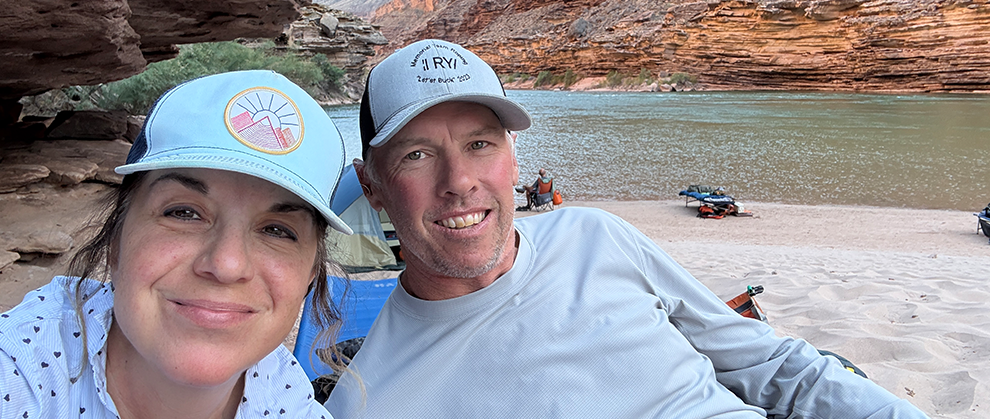
Travel has a way of shrinking our ego and expanding our perspective at the same time. I recently returned from a rafting trip through the Grand Canyon (highly recommended). Standing at the base of a waterfall among rock layers that are more than a billion years old has a way of recalibrating your thinking. Something about looking at that vast landscape made me realize that life is less about being perfect and more about helping others when you can, finding joy in small moments, and leaving the people around you a little better than you found them.
You come home remembering that the world is far bigger than your clinic, your last difficult client interaction, or the case that has been replaying in your head for three days. And somehow, that makes those worries feel a little smaller.
Why These Activities Helped
None of these activities eliminated anxiety. What they did was change my relationship with it. They reminded me that I wasn’t a veterinarian first. I was a human first. They also reminded me that my role as a veterinarian is to guide, advise, heal, and help when I can, not to control every outcome. Some things are simply bigger than me.
I am a human doing my best in a profession where the stakes are high. I am a human who occasionally gets things right. I am a human who occasionally gets things wrong.
The longer I practiced, the more I realized that anxiety often comes from believing we should somehow be exempt from the human condition. We shouldn’t. We’re not. We’re simply people who chose a profession that places us face to face with life’s hardest moments more often than most. We witness suffering. We witness loss. We witness love. And sometimes, despite our best efforts, things don’t go the way we hoped.
Once I accepted that, the anxiety didn’t disappear. But it got a whole lot quieter.