
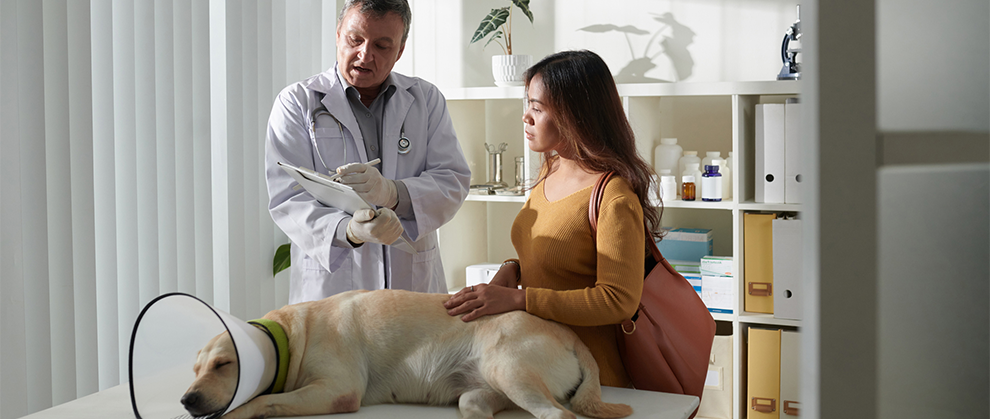
I’ve spent my entire career working at expensive veterinary hospitals. My first job was at a 24-hour emergency hospital in Portland, Oregon. My second job, where I spent most of my career, was in a ski town in Colorado. Neither practice was known for being the cheapest option in town. Along with practicing good medicine came some pretty healthy invoices, which meant I also became familiar with a handful of comments that every veterinarian has heard:
- “It costs more to get my dog’s teeth cleaned than my own.”
- “I practically own half this hospital.”
- “You should name the place after me.”
- “I can get this done cheaper somewhere else.”
I’ve heard ’em all. And honestly, some of them are true. You probably can get your own teeth cleaned for less than your dog’s. And if your only goal is finding the lowest price, you can almost always find someone willing to do something for less. Lately though, I’ve been thinking about those comments a little differently.
The Hairdresser, the Dental, and the Tattoo
Every six weeks I sit in a salon chair and hand over more than $200 to have my hair cut and colored. I know I could buy a box of hair color from the grocery store for $12. But that’s just too risky. What if something went wrong?
Over the years, my hairdresser and I have become friends. Now and then, she’ll text me a picture of a vomiting dog or a suspicious lump, and ask, “Should I be worried?” You know, the usual.
At one appointment, we started talking about her dogs’ terrible breath. I launched into my standard spiel about periodontal disease, bacteria below the gumline, hidden fractured teeth, and why dental cleanings are about far more than making a dog’s breath smell better. She listened, nodded along, and agreed it was probably time to schedule dentals for her three dogs.
The next time I sat in her chair, she couldn’t wait to give me the update.
Her regular veterinarian in Phoenix had quoted $700 to $800 per dog. She thought that seemed expensive, so she called the veterinarian from the small town where she grew up. Their estimate was $300 to $500 per dog. With three dogs, that added up to a substantial savings. “So I took them there,” she said. “Their breath is amazing now.”
You can probably guess the questions that popped into my head:
- Did they have IV fluids?
- Did they monitor blood pressure?
- Was there capnography?
- Did they use warming devices during anesthesia?
- Was a technician dedicated to monitoring anesthesia the entire time?
As I asked her these questions, her smile slowly faded. “I honestly don’t know,” she said. “Nobody talked to me about any of that.” She didn’t know if those things were included. She didn’t know they were options. She didn’t know they were even questions she should ask.
Why would she? She’s a hairdresser, not a veterinarian. She assumed a dental cleaning was a dental cleaning, just like I assume a haircut is a haircut. If no one explains what’s different, all she sees are two prices for what seems to be the same service.
As I sat there thinking about it, she started explaining why she mixed two colors instead of one. She talked about products that protect color and conditioners that reduce damage. I smiled to myself. Do vets talk like this when they explain surgery and anesthesia? They should. She wasn’t apologizing for her prices. She was proudly explaining her craft.
Then something on my hairdresser’s calf caught my eye. It was a tattoo — an unbelievably detailed portrait of one of her dogs.
“Whoa,” I said. “That’s new.” Her face lit up. She told me she’d found an artist on Instagram who specialized in pet portraits. Naturally, I wanted to know how much it cost.
“$400 a session,” she said proudly. “It took three sessions, but honestly it was such a deal.”
Here was a wonderful pet owner who had spent $1,200 to permanently preserve her dog’s image on her leg while driving several hours to save money on that same dog’s dental. It wasn’t because she loved her dog any less. She simply understood the value of one purchase far better than the other.
95 percent of pet owners consider their pet’s health and wellness a priority that they refuse to reduce, even when facing personal economic pressures, according to a recent Elanco survey.
They Don’t Know What They Don’t See
In veterinary medicine, our best work often happens behind closed doors. Clients don’t see the technician whose entire job is to watch one patient breathe. They don’t see the doctor studying the capnograph. They don’t notice the IV pump quietly delivering fluids, the circulating warm-water blanket preventing hypothermia, or the local nerve block that reduces pain long after the pet wakes up. They see a dog disappear into the treatment area and come back with clean teeth.
Every monitor in your treatment room probably has a story behind it. Many of them were purchased because something terrible happened and someone decided they never wanted to feel that way again. I remember upgrading our warming system because microwaved IV bags wrapped in towels weren’t always enough to keep patients warm. Then one patient suffered a thermal burn. We changed our protocol. We invested in capnography after losing patients who appeared stable until they suddenly weren’t. Those experiences change you and how you practice medicine.
Clients don’t know those stories unless we tell them. That’s why education has become just as important as medicine. If you’re charging more than the practice down the street, don’t assume clients understand why. Show them.
Write a handout explaining what happens when a pet is under anesthesia at your hospital. Give tours of your treatment area. Film a short video walking clients through your anesthetic protocol. Host an evening seminar or Zoom call where your technicians explain the monitoring equipment and answer questions. The more expensive your medicine becomes, the more intentional your education needs to be.
And finally, stop apologizing for practicing good medicine. Somewhere along the way, many of us became uncomfortable talking about the quality of our care. We present estimates while bracing for objections. We mumble through explanations because we’re worried clients will think we’re upselling them. We’re not. We’re advocating for the medicine we believe in. If you’ve spent thousands making surgery and anesthesia safer and more comfortable, tell that story.
People can’t appreciate what they never see.
A few weeks ago, one of my former VIP clients joined my golf group. Around the second tee box, the ladies started talking about their pets and vet bills. My former client laughed, pointed at me, and said, “I spent a fortune on Buffy’s and Shawna’s teeth at your hospital.”
“You did,” I replied. “But I think it was probably one of the best investments you ever made.”
She smiled and said, “Worth every penny.”