
I was recently asked to speak with a group of Canadian veterinarians facing a huge — Costco-sized — problem. In Canada, pet medications have historically only been available to pet owners through veterinarians. As a result, our Canadian colleagues have come to rely on pharmacy markups and frequent medication sales to support their businesses. These drug markups have historically allowed Canadian clinics to subsidize and lower their service fees.
In October 2024, the Competition Bureau of Canada published a report calling for an end to exclusive distribution practices that block non-veterinarian pharmacies from selling pet medications. This change opened the door for retailers to sell pet medications.
The first retailer to seize the opportunity was Costco. The company has rolled out drug prices that veterinary small businesses will have a hard time competing with. If you’re a veterinarian, this is disturbing news and not just because of the decreased pharmacy revenue.
Pet owners are going to see medications they’ve purchased from you over the years offered at significantly lower prices. How will they react? This is going to undoubtedly affect practices that have relied on pharmacy revenue to make ends meet. What narratives will pet owners adopt to explain this price discrepancy? There’s a real chance that veterinarians will be vilified.
Some Canadian doctors are putting their heads in the sand and hoping that pet owners don’t notice what’s happening. Others are reacting aggressively and recreating their business model, while still more are looking for a middle way. All of them are wondering what they’re supposed to do when the future is so uncertain.
Back in America, veterinarians are facing different disruptions. We have an inflationary environment, tech companies are trying to provide healthcare without performing physical exams, new veterinary schools are aspiring to crank out doctors, private equity groups are buying and selling our jobs, there’s a movement to create midlevel practitioners, and on top of it all, artificial intelligence is upending every aspect of the knowledge and service economy.
Canadian veterinarians have a significant challenge on their hands, but they certainly don’t have the market cornered on chaos and uncertainty about the future.
Party of Four No Longer
The last six months have been a rollercoaster ride for me. The veterinary conference I founded, Uncharted, is about to turn 10 years old, and that’s made me think about where medicine is going and how I want to engage with the next 10 years here. I’ll be turning 50 just as this article comes out, and that means I get a senior discount at Krispy Kreme Donuts, Banana Republic, and most car rental companies. And, to make me feel even more decrepit, my oldest daughter has moved away to college.
Of all these life events, the departure of my daughter has been the most difficult. She and I have always been close, and I knew that I was going to be in trouble even as she started the college search. She was so excited to look around and see what was possible, and the only thoughts I had were: What does this mean for me? Who am I if I’m not the father of two little girls? What are my days going to be like when this person who brings so much energy into my house leaves?
While my wife threw herself into the planning of the college trips and the strategizing of possible course selections or semesters abroad, I kept thinking about what my days would be like if I didn’t have this relationship in the way I’ve always known it. I was doing OK until we went to tour my daughter’s first-choice school. We were in the cafeteria when the Fergie song “Big Girls Don’t Cry” came on the overhead radio. I heard Fergie sing, “I’m going to miss you like a child misses her blanket, but I’ve got to get a move on with my life.”
Suddenly, my eyes burned, and my chest felt tight. It crashed down upon me that this change was going to happen. The change felt like it was something that was being done to me — that my life was being bent by some outside force.
For weeks afterward, I ruminated on what my future would look like. Life had suddenly become a force of nature, and I was clinging to a raft being tossed around. I didn’t get to choose my experience or what the future would be. I was purely reacting to something bigger than myself. It was a feeling of powerlessness and disappointment that I sat with for a long time.
Firefighters Happen to Fires, Not the Other Way Around
One day, I went to the gym and saw my friend Adam working out alone. I met Adam when his mother was the assistant manager at the vet clinic where I work, and he worked in the kennels as a teen.
Now Adam is a firefighter. He told me that he had a particularly hard week because his longtime girlfriend’s dog had needed emergency surgery. They went to the emergency clinic because the dog was lethargic and pale. When they got there, the doctor identified a splenic mass and quoted $10,000 for surgery.
I asked Adam what he and his girlfriend planned to do. He said that they wanted to save their dog, and they would come up with the money to pay for it.
Adam’s girlfriend is a hairstylist who’s putting herself through nursing school. I knew this amount of money was challenging for them, so I asked, “How are you holding up?”
Adam said, “This is important to us, so we decided to make it happen. We’re going to be fine, but it’s been a hard couple of days.”
What Vet Medicine Does to Us
Later that evening, I came across an online article about veterinarians being put into difficult ethical and moral positions. It talked about how things would happen to veterinarians, like clients requesting euthanasia for a healthy pet or clinics not allowing teams to help pet owners who can’t afford it. The whole article was framed around how powerless vet professionals are and how these situations are inflicted upon them.
As I read, I couldn’t help but think about Adam, his girlfriend, and the perspective they had on handling hardship in their lives. They actively decided to go to surgery. They solicited advice from friends and family in vet med. They moved things around financially, made hard choices, and created their own plan for navigating a situation they did not want or create.
Adam’s tired but confident smile struck a sharp contrast to the emotional presentation of the article that seemed to argue veterinarians lack the personal autonomy to make any difference when facing hardship. As I held those two ideas in my mind — Adam’s belief in himself versus veterinarians having no choice but to absorb the challenges before them — I recognized how much autonomy I have facing the changes ahead and how I had been thinking like the hypothetical veterinarians in the burnout article.
Main Character Energy
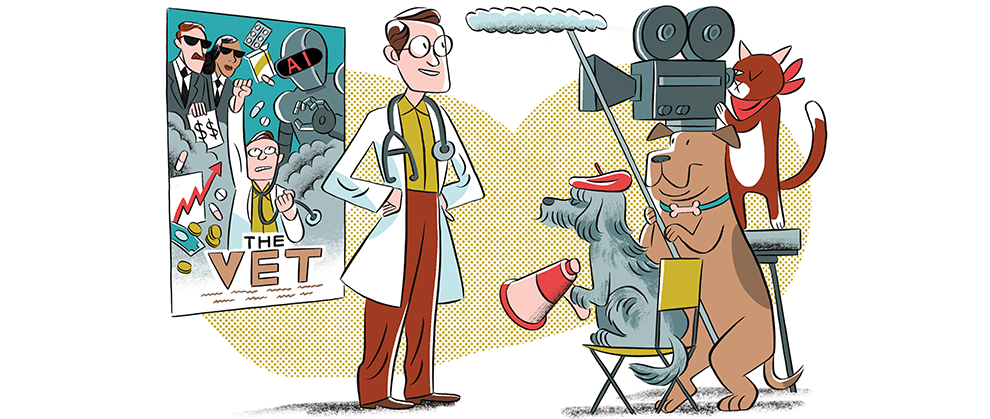
Watching “The Odyssey” earlier this year, I considered how different Odysseus’ experience was from that of his men. In the film, Odysseus chose how to move forward. He decided when he would leave and when he would stay. He decided how to navigate obstacles and face the challenges before them.
Meanwhile, Odysseus’ men went along for the ride and took the punishments that befell them. They got trapped and eaten by Cyclops, turned into pigs, washed away in a storm, and eaten by a sea monster. Odysseus’ followers were background characters who stood in line like nails until the giant hammer of life struck them. Only Odysseus recognized his power to shape his own story. Only he brought main character energy.
Adam and his girlfriend have main character energy. Once I realized that, I understood what I needed to do to feel OK about the uncertainty I was facing. I needed to stop focusing on what the world was doing to me and instead focus on what I could do right now, and to believe that I would continue to figure out how to respond as more of life became clear.
I don’t want to be the supporting character who waits offscreen until my daughter, the hero, comes home to visit. This is my story. I’m going to be the main character in it.
I’m glad my kid is having a wonderful time on her own and that she’s learning and growing. I am also having a wonderful time, learning, and growing. My journey is not subservient to hers. There is far more than one spotlight on this great stage.
My experience this year changed when I began making choices about what I want. I am gaining hobbies, working happily on my business and in the clinic, making new relationships, and spending more time with my younger child. I’m reading and trying new things. I’m leaning into new technologies in medicine that are making me more efficient and having more fun in practice than I’ve ever had before.
The fates aren’t tossing me around, and I’m not following Odysseus into any caves. I am my own Odysseus, and that lesson has brought me comfort. It’s also the best lesson I can offer as we all look ahead into an uncertain professional future.
Certainty in an Uncertain World
I cannot know how the changing pharmacy in Canada is going to affect our northern colleagues. I still wonder if private equity is going to change what it means to be a veterinarian, what practice will be like after five more years of technological advancement, and how people are going to afford care. But I am certain I will have the power, autonomy, and understanding of the circumstances needed to respond.
I know that I can lean into the things I’m excited about, and I can lean away from the things I don’t want to engage in. I can invest in the relationships that matter, grow and develop my clinical skills, and adapt to be valuable to my family, community, and employer regardless of what the future holds.
The veterinarians who struggle most will be those who feel life is happening to them. They’re the ones left stranded when their kids leave, or stuck in practices with rules they don’t believe in.
The veterinarians who will enjoy practice, who come to love our profession not as it is but as it will be, are those who adapt. They communicate; they advocate for themselves and their patients. They accept change, but not on unconditional terms. They guide that change like a skilled sailor in a storm.
I don’t expect any of us to think the future will bring nirvana, but I do believe we can have faith in our future selves. We can be comfortable knowing that change is going to happen, and that when it does, we’ll be wiser and more experienced versions of ourselves than we are today. We’ll be better able to make the choices that we need to be happy and to navigate the changes.
This confidence, this centering of ourselves, this main character energy — this is what will define successful veterinarians in a world of chaos and uncertainty.