
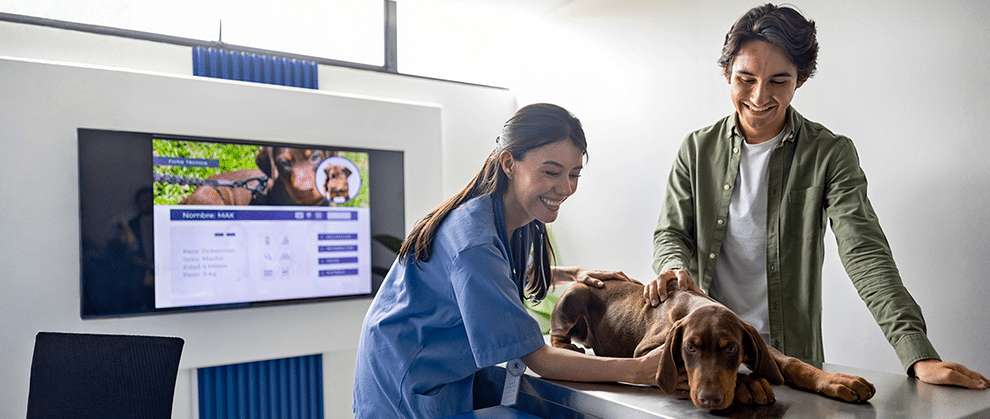
For more than a century, veterinary medicine has operated through a single point of entry: the hospital’s front door. If a pet needed care, the owner walked in. The front door controlled access to information, diagnostics, medications, and medical expertise. Veterinary teams served as trusted experts, interpreters, and gatekeepers.
The model worked well for its time. But the front door is no longer the only way in. Today, care is delivered through windows, under doors, in mailboxes, and over data streams and digital platforms. The walls of the veterinary hospital still stand, but they are becoming increasingly porous.
Consider a common scenario. A dog’s wearable activity tracker detects subtle changes in movement. An artificial intelligence platform analyzes the data and flags possible early osteoarthritis. The owner schedules a telehealth consultation, uploads wearable information, and receives guidance before visiting the clinic.
The veterinary team still plays a central role. But the first perception of disease originated in the living room, not the exam room.
The History of the Four Walls
The traditional model succeeded because it fit the realities of its era. Veterinary hospitals centralized expertise, diagnostics, and treatment in one physical location. Doctors performed hands-on exams, dispensed medications, and maintained medical records. Everything happened under one roof.
Most importantly, the model was built in a world defined by scarcity — scarce information, limited diagnostics, and few technological alternatives. Pet owners relied on the veterinary hospital because there were few other avenues to access medical knowledge or care.
Today, scarcity is being replaced by abundance. Information is no longer scarce. It’s everywhere.
Four Walls Disrupted
Innovation is creating new entry points into veterinary care. AI assists with triage, predictive risk modeling, and interpretation of diagnostic images. Home diagnostic tools allow pet owners to submit biological samples, monitor glucose levels, and collect data without visiting a clinic. Wearables track activity, sleep patterns, and physiological trends.
The connected pet continuously generates behavioral and biometric data that can reveal early signs of disease. Smart litter boxes detect urinary abnormalities. Telemedicine platforms enable remote triage, follow-up consultations, and specialist input. Diagnosis is no longer confined to the exam room.
Therapeutics are evolving as well. Genetic screening can identify disease risk years before symptoms appear. Targeted monoclonal antibodies and customized nutrition are expanding rapidly. Medications and therapeutic diets arrive at the client’s doorstep. All of it occurs without a car ride to the clinic.
What’s the Veterinarian’s Role?
If diagnostics originate at home, AI assists with interpretation, remote platforms deliver consultations, and pharmacies ship medications directly to the client, what is the hospital’s front door, and what is the veterinarian’s role?
Historically, the veterinary hospital controlled entry, and the veterinary team functioned as the doorman. The future role looks more like an orchestra conductor. A doorman opens one door. A conductor coordinates many instruments.
Veterinary professionals integrate multiple information streams — validating remote data, integrating AI insights, and deciding when hands-on medicine is required. Authority shifts from controlling access to assimilating findings. In truth, veterinarians have always played this integrative role. Clinical medicine has long required assembling disparate clues into a diagnostic picture. The difference today is the scale. The orchestra has become larger, with more instruments to conduct.
AI illustrates the shift. Today, over-reliance on AI could expose veterinarians to liability if an adverse outcome occurs. Clinical judgment remains essential, or we risk failing to meet the standard of care.
But the future may present a different challenge. As AI tools become validated and widely available, failing to incorporate AI will fall below the expected standard of care. Standards evolve alongside technology. Ignoring new tools may someday carry the same risk as misusing them.
Clinging to the Front Door
Some will attempt to slow disruption by restricting telemedicine, tightly protecting professional scope, or limiting new care models.
History suggests such resistance rarely stops innovation. Instead, it often accelerates parallel systems. If veterinary medicine clings too tightly to the front door, technology companies will create alternative entry points to meet consumer demand. Pet owners will seek guidance elsewhere, and veterinary hospitals risk becoming centers of procedures rather than coordinators of care.
The profession’s long-term influence depends on remaining at the center of the ecosystem.
Four-Wall Evolution
None of this means the physical hospital becomes irrelevant. The four walls remain essential. Surgery, complex diagnostics, emergency care, and hospitalization still require hands-on veterinary expertise. Face-to-face interactions will still build the trust that anchors the veterinarian-client relationship.
What will change is how patients enter the system. Routine monitoring, portions of triage, and some chronic disease management increasingly occur outside the hospital. The four walls remain important. They simply no longer offer the only doorway.
Adapting to this environment will require cultural change. Veterinary professionals must become comfortable sharing information, collaborating with technology, and letting go of the traditional gatekeeping mindset. New educational models will be needed. New workflows will emerge. New team roles will develop. New revenue models will result. The profession’s identity will gradually shift from controlling information to integrating and communicating knowledge.
Perhaps the biggest challenge our profession faces is access to care. By some estimates, nearly half of pets in the United States will not see a veterinarian this year. Alternative access points — telehealth, remote monitoring, and home diagnostics — will enable veterinary teams to reach patients who would otherwise receive no professional care. Opening more doors will ultimately allow us to help more animals.
The Future of the Four Walls
Veterinary medicine has spent decades defending the front door. But the future may not belong to the profession that controls the door. It may belong to the profession that coordinates the entire house.
Technology will continue to create new entry points for pet care. The real question is whether veterinarians remain at the center of those systems or watch from the sidelines while others build them. Personally, I believe veterinarians should be conducting the orchestra, not waiting at the front door.