
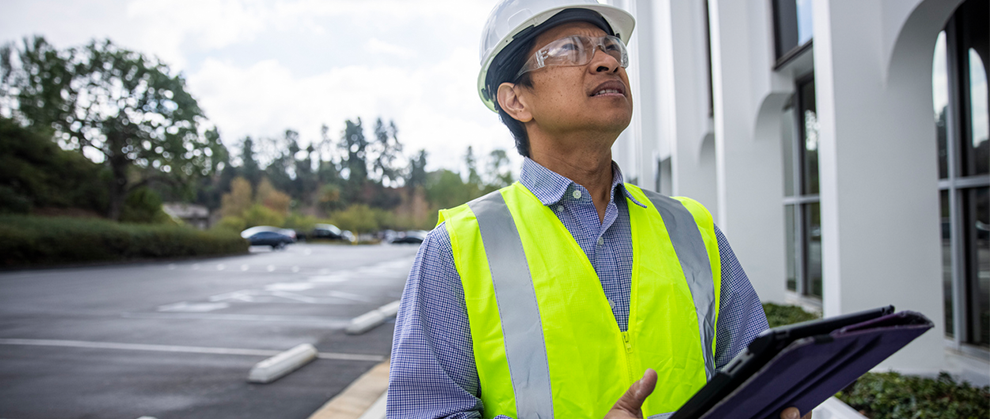
Owning or renting commercial property for your veterinary practice comes with risks. Claims involving the physical building can be very costly, but they are often among those that you have the most direct control over. Managing the risks associated with your location doesn’t need to be complicated. Every practice can invest a little time into inspecting the property, identifying potential hazards, and correcting problems before someone is injured.
Outdoor Hazards
In northern states, slip-and-fall claims can become especially troublesome and expensive. A client slipping on ice or tripping over a crack in the sidewalk can quickly turn into a six-figure claim.
Simple risk management steps reviewed at least annually can help identify many of these less traditional exposures before an incident occurs. Seasonal changes are also a good reminder to look at the practice with fresh eyes — especially in the fall, before cold weather arrives.
Many practice owners hire outside contractors for groundskeeping, snow removal, and other property maintenance. They often assume that doing so transfers responsibility to the contractor. In some circumstances, a contractor may be responsible for an incident. However, hiring a contractor does not automatically remove all responsibility from the practice owner or building tenant.
Fall and winter create several other exterior hazards that should be considered:
- Wet leaves on sidewalks
- Earlier sunsets exposing inadequate exterior lighting
- Potholes
- Sidewalk cracks
- Clogged gutters and downspouts
- Loose handrails
- Uneven steps
- Faded parking lot markings
- Damaged curbs
- Bunched up or saturated entry mats
Another call we occasionally receive involves a client or employee driving into a high curb, concrete barrier, or light pole. While the driver is usually responsible for the accident, bright yellow paint on these objects can make them easier to see and provide an additional way to reduce risk.
Indoor Hazards
The inside of the practice creates its own set of concerns. Water, urine, cleaning products, and other fluids can quickly create slippery floors. Clients can become tangled in retractable leashes. Dogs may lunge at another animal or client in a crowded reception area. Cats may escape carriers. Clients may trip over scales, retail displays, chairs, or portable signs.
Automatic doors and congested entryways can also create problems for animals that are already anxious or reactive. Elderly clients or those with mobility limitations may be attempting to manage a pet, a carrier, or supplies while navigating steps or slick flooring.
Practices should regularly look at these areas from the client’s perspective. Something that seems obvious or easy to navigate for a team member may be more difficult for someone holding an excited dog or a cat carrier.
Contractors
Contractors are another important part of premises risk management. Before hiring a contractor, consider whether there is a written service agreement, when the contractor is expected to respond, who is responsible for monitoring conditions between visits, and whether the contractor carries liability insurance.
The practice should also request a certificate of liability insurance. When appropriate, the practice or building owner should be named as an additional insured under the contractor’s policy. A certificate alone does not create coverage, so the written agreement and insurance requirements should clearly address the responsibilities of each party.
While temperatures were above freezing during the day, they dropped below freezing at night, so the pooled water refroze. This created slippery conditions across the property.
The practice spread salt in the morning during the thaw. However, no one reinspected the parking lot or sidewalks later that afternoon when the temperature began to fall.
Late in the day, an elderly client slipped on newly formed ice. She broke her leg and required extended medical treatment and rehabilitation. The claim took more than 24 months to resolve.
What could the practice have done differently?
- A team member could have been assigned to inspect the parking lot and sidewalks at the beginning of the day and again as weather conditions changed or hourly.
- The practice could have maintained a salt and sand log documenting when the property was inspected and when corrective action was taken.
- The practice could have kept a bucket of salt or sand near the main entrance. (Practices concerned about salt affecting animals can use sandbox sand from a local home improvement store. Sand does not melt ice, but it can provide additional traction in problem areas.)
One of the first things our client’s insurance carrier’s claims adjuster requested after the injury was the snow removal and salt log. The adjuster wanted to know when the sidewalks and parking lot were last inspected and treated. In this case, all the practice could provide was an approximate time from several hours earlier, when a team member remembered spreading salt.
Landlords
Practices that lease their property should also understand what the lease says about maintenance and upkeep. Even if the landlord is responsible for exterior lighting, snow removal, parking lots, or common areas, the practice may still need to report hazards, warn clients, or take temporary corrective action until the issue is resolved.
Inspections
A formal inspection process can help prevent important responsibilities from being overlooked. The practice should decide:
- How often inspections will be performed
- Who will perform inspections
- Who is responsible for corrective action
- Where inspection records will be maintained
Inspections should also take place when conditions change. A morning inspection may not be enough after rain, snow, a temperature change, a spill, a delivery, or maintenance work. When holding a safety meeting for the clinical side of the practice, include one or two premises-related areas of focus as well. Assign responsibility, document what was inspected, and correct hazards before someone is injured.
When an incident occurs, preserve as much information as possible. Photograph the area, identify witnesses, complete an incident report, and save any available security video — many camera systems automatically erase recordings after a short period.
These examples are not a complete list of every claim that might occur at your practice. They are intended to provide food for thought about potential problem areas and opportunities for improved safety.
The top risk-management tip is simple: Inspect, document, correct, and repeat. A few minutes of prevention may save the practice from years of dealing with a costly claim.