

When a miniature Highland calf sprawls across an exam room floor, or a bird owner drives two hours for a routine wellness visit, something important comes into focus: the gap between the pets people love and the veterinary care they can access. Across the country, companion animal practices are beginning to fill that void — not by overhauling their entire model, but by thoughtfully expanding into large animal, small ruminant, and exotic species care.
The benefits are wide-reaching. Underserved patients get care. The human-animal bond is preserved. Practitioners diversify revenue, strengthen client loyalty, and rediscover job satisfaction. Here’s how veterinary teams are making it work, and how others can follow in their footsteps.
Living Large
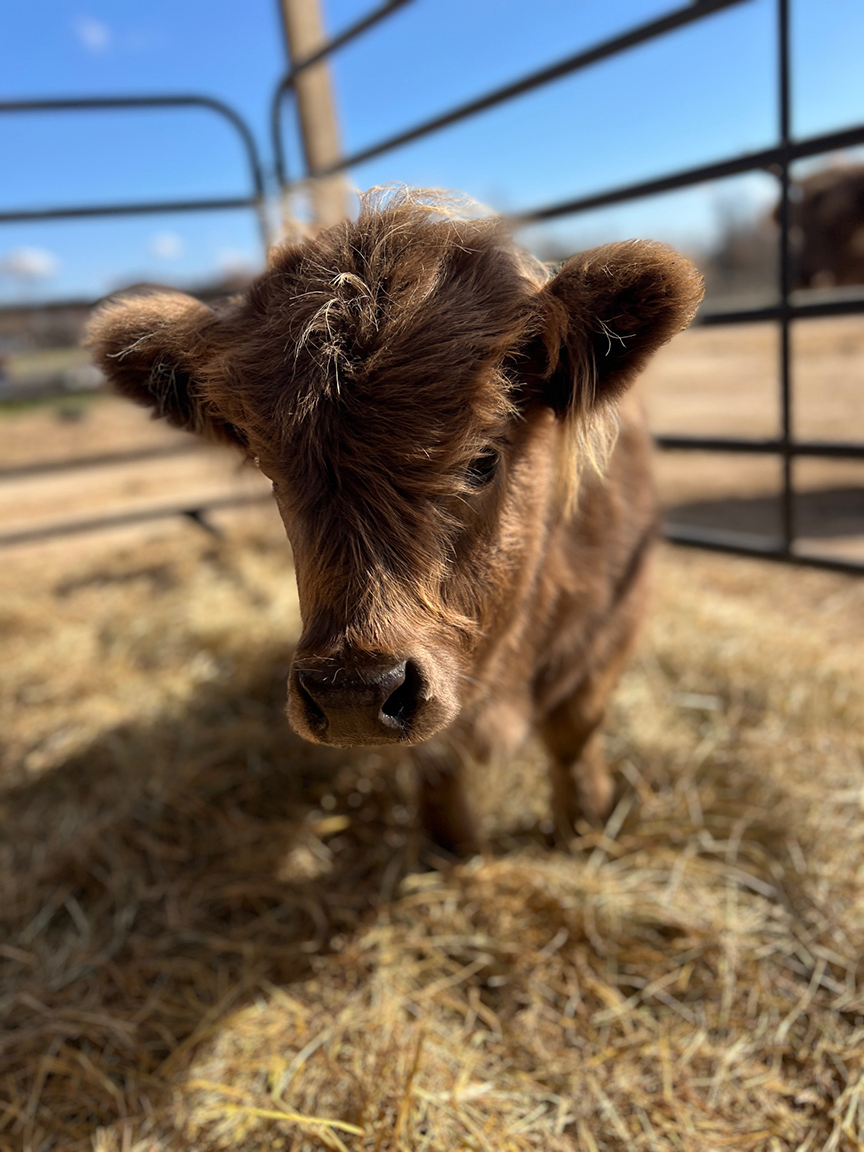
June Bug, a miniature Highland cow, after an exam with
Dr. Hannah Gawf. Photo courtesy of Hannah Gawf.
Adding pet livestock services can provide new opportunities for small animal practices.
“This is our pet. We’re not going to slaughter our pet. Is there something else we can try? We’ll do anything,” the client, who was on the verge of tears, said to Dr. Hannah Gawf, a mixed animal veterinarian and owner of Orchard Hills Veterinary Clinic in Bonne Terre, Missouri. Dr. Gawf gazed down at the patient quietly resting on her exam room floor, sprawled out like a golden retriever. Except the pet wasn’t a dog; it was a miniature Highland calf.
The calf had a spinal injury, and the owner came to Dr. Gawf for a second opinion after being given a grim prognosis at another practice.
“I said, ‘Absolutely. We can have a medication compounded and flavored to taste like molasses,’” Dr. Gawf recalled.
For Dr. Gawf, the moment is a reminder of an evolving need. “Many modern pet owners are seeking more compassionate, personalized care for their large animals instead of a traditional production-based mindset,” she said.
And while U.S. interest in backyard poultry, small ruminants, and pet livestock such as miniature cattle grows, the number of available veterinarians to care for them remains flat. But what starts as a shift in client expectations can evolve into a promising opportunity for small animal practices willing to adapt.
Mixed Reactions: Rising Demand Meets Limited Access
Today’s large animal veterinarians are already in short supply. According to 2025 American Veterinary Medical Association estimates, only 3.1% of the U.S. veterinary workforce was employed in food animal practice, with 3.9% in equine practice, and 5.6% in mixed animal practice. The small number of large animal veterinarians is stretched thin and focused on issues of herd health and the economic realities of production medicine. As a result, would-be clients are met with few choices, long wait times, and lengthy travel to rural areas.
“We’re currently witnessing an interface between pet ownership and livestock,” said Dr. Michael Pesato, president of the American Association of Small Ruminant Practitioners. When new clients contact Four States Veterinary Services, Dr. Pesato’s ambulatory food and fiber practice, many have already been turned away from general practices that see only dogs and cats. “New pet livestock owners don’t always know how to find a veterinarian,” Dr. Pesato said. “And, some food animal practitioners don’t want to work with pet livestock. So not only can small animal practices profit from seeing these animals, but they’re also providing care to a drastically underserved population.”
Mixing In: The Benefits of Expanding Care
In addition to improving access to care, the potential benefits of expanding into traditionally large animal species are as diverse as the patients themselves.
Revenue
While food animal medicine is seldom regarded as lucrative, Dr. Pesato views pet livestock as a new breed of care. “These clients are willing to do blood work and ultrasounds — things that might be more on the small animal spectrum,” he said. “And they’re willing to pay pricing that’s more in line with small animals than typical food animal charges.”
Client Relationships and Retention
While small animal patients account for 85% of pets seen at Orchard Hills Veterinary Clinic, Dr. Gawf sees the practice’s large animal services as a way to strengthen client loyalty. “When our clients realize we provide care for more than dogs and cats, they’re so excited,” she said. “It’s helpful for them to have a doctor who is diversified in multiple species and a relationship with someone who can care for both large and small animals.”
Improved Animal Health
Along with better access to hands-on care, educating clients on basic husbandry and species-specific care promotes greater animal health and helps prevent avoidable emergencies. “One of the most important things about food animal practice, and especially small ruminant practice, is education,” emphasized Dr. Pesato. “For example, pet owners may be accustomed to feeding kibble to their dog, and they’ll extrapolate this knowledge to feeding their goat grain. They don’t realize that doing so can cause bladder stones.”
Well-Being and Job Satisfaction
Expanding care isn’t simply an added demand — it’s the chance to practice differently. “As a veterinarian and practice owner, being able to step outside to see a horse in the parking lot or go on a farm call is beneficial for my mental health,” said Dr. Gawf. “Just a moment of fresh air, a chance for my staff to step away, and for the clinic to slow down for a while makes a huge difference.”
Dr. Pesato believes the unique challenges of multi-species care can also boost job satisfaction. “I’ve had many students focused on small animals who’d love to see the occasional goat, sheep, or pet livestock walk through the door,” he added.
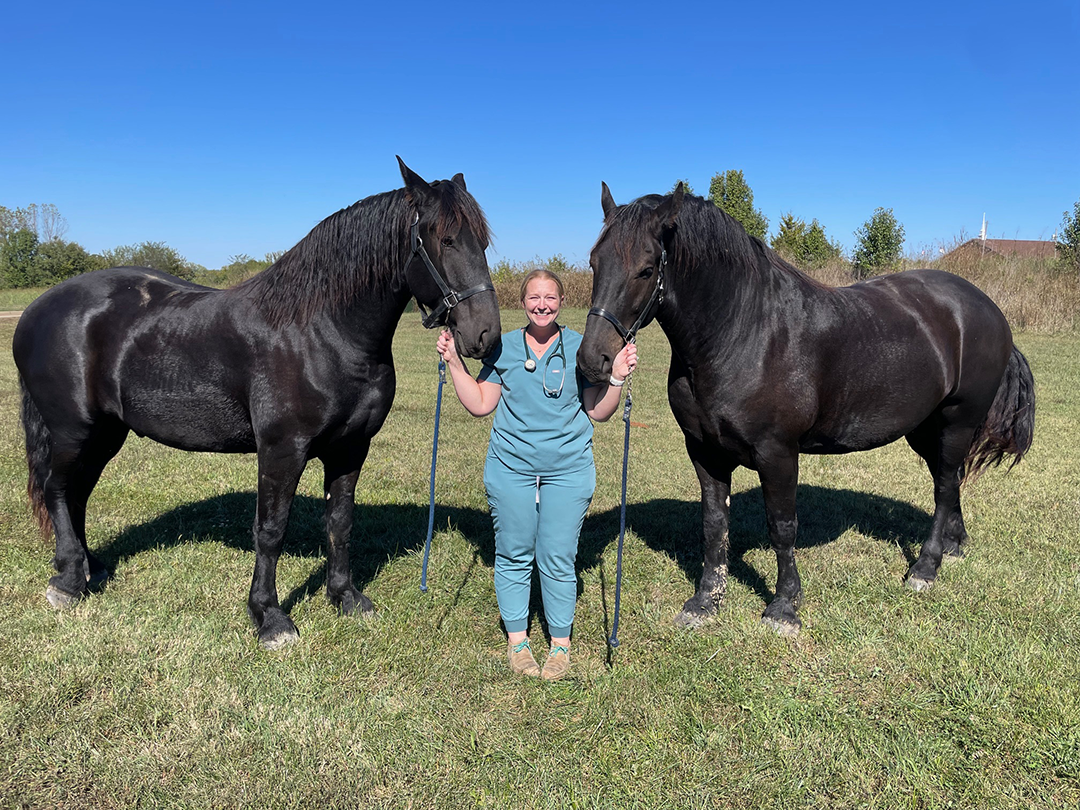
Dr. Hannah Gawf with two Percheron horses, after performing health certificate exams. Photo courtesy of Hannah Gawf.
- American Association of Small Ruminant Practitioners: Members have access to an active and supportive LISTSERV, RACE-approved webinars, and more.
- American Association of Equine Practitioners: The AAEP website offers extensive guidance on horse health topics, including vaccination charts.
- The American Consortium for Small Ruminant Parasite Control: Offers online deworming charts, a resource library, and FAMACHA certification.
Start Small: You Don’t Need a Truck to Get Rolling
Physical limitations such as a lack of space, a mobile unit, or proper facilities often deter interested veterinarians from adding large animal, small ruminant, or poultry medicine to their offerings, but Dr. Gawf said that shouldn’t hold them back. “I still don’t have large animal facilities at my practice, although it’s an option for the future. I see horses in my parking lot and small ruminants in the clinic,” she said.
Dr. Pesato agreed. “A lot of pet livestock are accustomed to being transported. Some of them even live in the client’s home, so hauling them into the clinic isn’t a big ask. Plus, most sheep and goats are the size of a Great Dane or smaller. They fit in an exam room.”
As for farm calls, Dr. Gawf is a bit of a MacGyver. “I have a Chevy Traverse and Milwaukee Packouts in the back with labeled drawers to stay organized,” she said. “You don’t need a truck and a vet box.”
Startup supplies for basic large animal care are also minimal and affordable. Livestock vaccines vary by species but are generally inexpensive and often available in bulk vials. “There are a couple of basic antibiotics, and things like Banamine that can be used across several species,” explained Dr. Gawf. “They’re inexpensive and have a long shelf life, so it’s not an issue if you don’t see these species every day. Honestly, to get started, you just need a small pharmacy for large animals and a stethoscope.”
Scope of Services
Stepping outside companion animal medicine can seem daunting at first. Maintaining a narrow focus while building a knowledge base can help veterinarians ensure success. For Drs. Pesato and Gawf, this means sticking with the fundamentals. “Wellness care is a huge opportunity,” said Dr. Pesato.
“A really good physical exam is a great place to start,” agreed Dr. Gawf. “And focusing on one species at a time, because it can get overwhelming.”
Regulatory services offer another easy point of entry. “Equine medicine is actually very feasible because most people can trailer the horse to you,” said Dr. Gawf. “Coggins tests, health certificates, and routine vaccinations are all very straightforward. I just saw a work-in appointment this morning for these, and it took me 15 minutes.”
Thanks to virtual care options, herd and flock health evaluations are also an opportunity for interested veterinarians. When in-person consultations aren’t convenient, veterinarians can evaluate pictures or videos of the animals, their housing, and their feed.
Basic diagnostics and procedures are also within reach, including blood sampling, imaging, collecting swab samples from poultry, castration, tube cystotomies for blocked goats, and wound repair following dog attacks. “You may think, ‘I don’t know … it’s a goat.’ But if you know how to do surgery, you can do surgery on other animals,” said Dr. Pesato. “You just have to do some reading in your surgical textbook.”
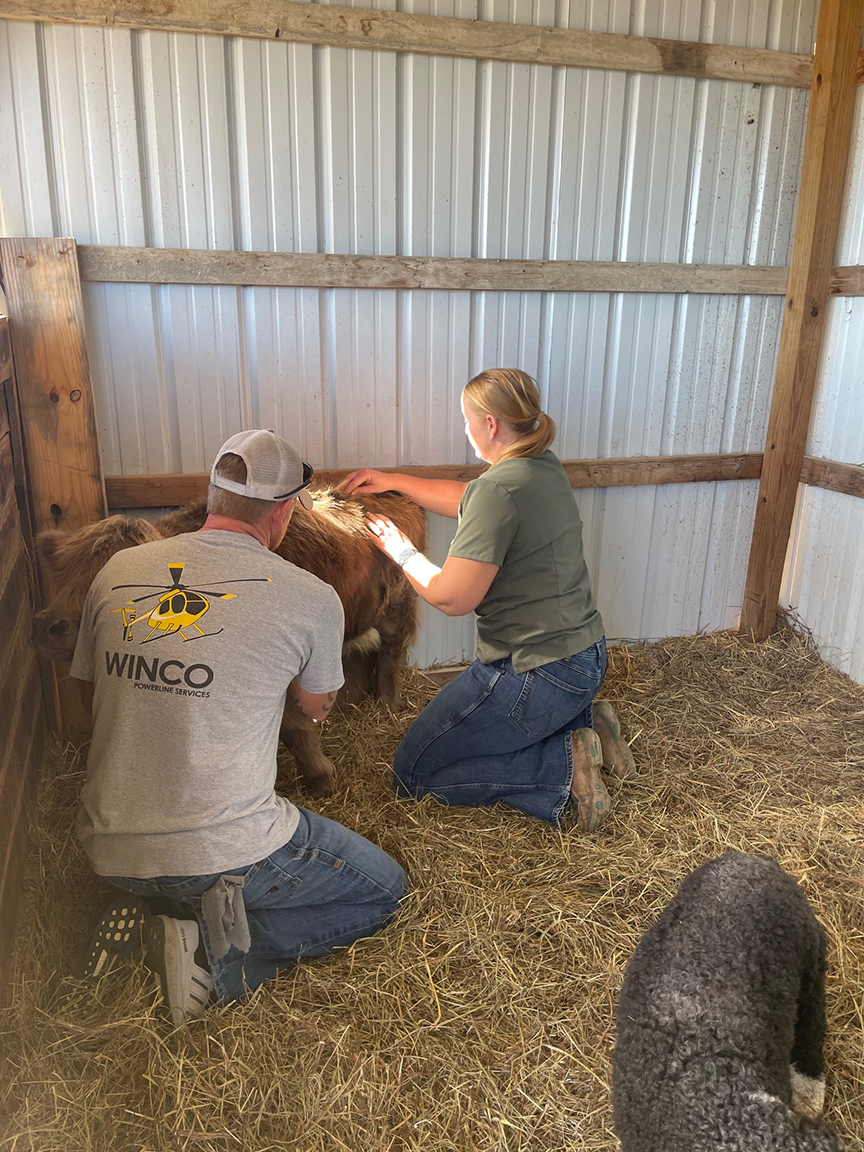
Dr. Hannah Gawf performs an orthopedic exam on a miniature Highland cow. Photo courtesy of Hannah Gawf.
Involving the Team
Adding large animal services can also create valuable opportunities for veterinary technicians and assistants. Training the team to perform basic care and husbandry tasks — such as hoof and tusk trims and diagnostic sample collection — frees the veterinarian for other duties while adding revenue and increasing face time with clients. “There are many technicians who would jump at the chance to learn these skills, because there aren’t many large animal tech jobs available,” said Dr. Pesato.
“Half of my technicians started with no large animal experience, and they’ve learned so much,” added Dr. Gawf. “I can truly count on them.”
Building Trust, One Species at a Time
Integrating large animal services requires a clear understanding of species-specific needs, both to inform care decisions and earn client trust.
“Practice the best possible medicine that you can for whatever species you’re working with,” advised Dr. Pesato. “Every species has some similarities, but they also have stark differences. If we respect those differences and show our clients we’re practicing the best medicine for that pig, sheep, goat, or chicken, they’ll come back because they feel that passion. They’ll come in droves because they know you want to help.”
Transparency about skills and experience can also strengthen new client relationships when veterinarians are just starting. Dr. Gawf recommends setting boundaries and being willing to refer for more complicated care. When referral isn’t possible, setting clear expectations is key.
“Making clients aware, and saying ‘We’ll do as much as we possibly can,’ is the best policy,” said Dr. Gawf. “For things like a goat castration, chances are the client doesn’t have a ton of goat experience, or they would’ve done it themselves. This lessens stress on the veterinarian because they’re coming to you and saying, ‘I’m not capable, but you’re a surgeon, and you care for small animals, so you’re going to be able to do it.’ If they’re asking for things like that, they’re probably fine with the fact that you may not do that procedure every day.”
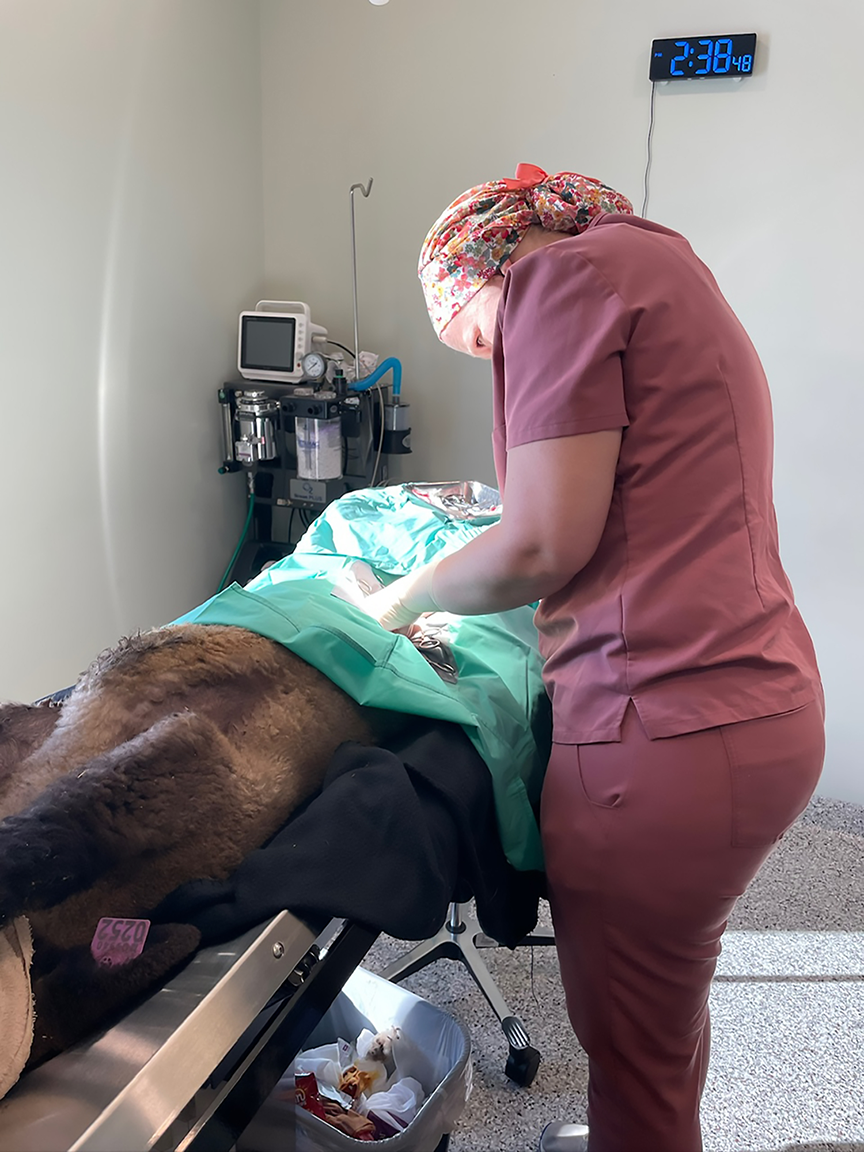
Dr. Hannah Gawf performs a hernia repair on a sheep. Photo courtesy of Hannah Gawf.
Puppies, Kittens, and … Potbellied Pigs
As more pet owners share their lives, backyards, and homes with farm animals, the distinction between small animal practice and large animal practice becomes less defined. But along with it come abundant opportunities for companion animal veterinarians to ease the burden on their large-animal colleagues, foster better animal health and stewardship, and increase revenue and job satisfaction in their practices.
And with this evolution, integrating large animal patients into a small animal setting is becoming an everyday reality. “Starting a mixed practice was uncharted territory for me,” Dr. Gawf shared. “I’m proud to show other veterinarians that the opportunity is there — and even though it’s a little scary at first, it is doable.”
“Build it, and they will come. I’ve seen it,” said Dr. Pesato, providing a final note of advice: “But if you’re going to start seeing pet pigs, get some earplugs.”
- “Goat Medicine,” by Drs. Mary C. Smith and David M. Sherman
- “Sheep and Goat Medicine,” by Drs. David G. Pugh and Aubrey N. Baird
- “Potbellied Pig Veterinary Medicine,” by Dr. Kristie Mozzachio
- “Backyard Poultry Medicine and Surgery: A Guide for Veterinary Practitioners,” by Drs. Cheryl B. Greenacre and Teresa Y. Morishita
An Exotic Opportunity
From rabbits to reptiles, many exotic pets don’t get the veterinary care they need. Some companion animal practices are changing that.
When the owners of Stanley — a white-bellied caique parrot — moved from Florida to New England, they hoped to establish a relationship with a veterinarian trained in avian care. They soon found themselves driving two hours to reach one of Dr. Melissa Magnuson’s three New Hampshire practices. Not to access a rare treatment option. Not for surgery. For a wellness exam, nail trim, and beak assessment. That’s the state of exotic pet care in much of the country. And, for companion animal practices willing to expand their services, it represents a significant opportunity.
“More people are viewing rabbits, guinea pigs, reptiles, birds, and other exotic species as true family members, not secondary pets,” said Dr. Colleen Roman, vice president of the Association of Exotic Mammal Veterinarians and owner of AnimALL Mobile Veterinary Service in Atlanta. “These owners are seeking the same thoughtful wellness care, pain management, diagnostics, nutrition counseling, and end-of-life support that dog and cat owners expect.”
Exotic Pet Care Demand and Access
According to AVMA data, nearly 12% of pet-owning U.S. households have an exotic or non-traditional pet. An estimated 17.6 million exotic pets reside within 9 million U.S. households — about 51% of those pets are reptiles and 26% are birds.
Exotic pet owners spend roughly as much on veterinary care as dog and cat owners, yet only about 35% have a regular veterinarian for their exotic pets, often because access to exotic veterinarians is limited.
Many pet owners remark that it’s challenging to find a veterinarian willing to see their chicken or turtle, said Dr. Amanda Wong, a staff veterinarian in the companion exotic animal medicine and surgery service at the UC Davis School of Veterinary Medicine.
“Combined with the fact that pet owners are increasingly expecting a high standard of veterinary care for their pets, these statistics identify a portion of the veterinary market that is underserved, particularly in regions where reliable care for exotic pets is hard to access,” Dr. Wong said.
Dr. Magnuson, who built her expertise in exotic veterinary care under a mentor’s guidance, enjoys training her team so they can also serve exotic species. Still, there aren’t enough veterinarians to care for exotic pets. “It’s an underserved area, and pet owners drive hours to see us,” she said. “For vets looking to add a revenue stream and service an unserved community of animals, this is a great way to do it.”
Adding Exotic Services
For companion animal practices interested in adding exotic pet services, a gradual approach is often the most successful. Many hospitals begin with rabbits, guinea pigs, and ferrets, because mammalian anatomy and physiology are generally more familiar to companion animal veterinarians than avian or reptile anatomy and physiology, said Dr. José Biascoechea, owner of Exotic Vet Care in Charleston, South Carolina.
“Wellness exams, husbandry consultations, and management of common medical conditions provide an excellent entry point while clinicians gain practical experience,” he said.
According to Dr. Biascoechea, most veterinarians already possess the medical foundation needed to expand into exotic animal medicine. However, he warned that clinicians should realize that anatomy, physiology, nutrition, pharmacology, and handling techniques vary significantly among species.
Training the Team
All team members, including receptionists, should be trained in identifying when an exotic animal is in distress and requires care, advised Dr. Wong. And any team member involved in physical restraint should be taught the basics of safely handling each species. Dr. Wong also recommended that veterinary technicians performing medical procedures such as venipuncture and anesthesia have appropriate training before handling a live patient.
While advanced certifications and specialty training are available, they aren’t prerequisites for providing quality care to many exotic species. Veterinary teams can successfully incorporate exotic animal medicine into their practices through mentorship, hands-on labs, and other continuing education opportunities.
But knowing when to make referrals is essential, Dr. Biascoechea noted. “Exotic species often mask signs of illness until disease is advanced, and referral delays can negatively affect outcomes,” he said. “Consulting with or referring cases to a more experienced or board-certified exotic animal clinician sooner rather than later can make a big difference in diagnosis, treatment options, and overall patient prognosis.”
Getting Everyone on Board
Early in Dr. Len Donato’s career, about 20% of his patients were exotic pets. In 2001, he bought Radnor Veterinary Hospital in Wayne, Pennsylvania — a companion animal practice at the time — and added exotic services right away.
Today, about half of the patients at Radnor are exotic pets, and all 10 of the veterinarians there see every species. Dr. Donato said that the entire team should be on board with adding exotic animal care to the practice, from the veterinarians and technicians to the receptionists. “There has to be a whole hospital desire,” he said. “Otherwise, this won’t work.”
“The most common barrier I’ve seen among colleagues hesitant to broach exotic animal care is a fear of the unknown,” said Dr. Wong. “At the end of the day, medicine is medicine. Exotic pets deserve access to care, and this field can be so rewarding when properly implemented into practice.”
Association of Avian Veterinarians
Association of Exotic Mammal Veterinarians