

With a heart for animal rescue and a love of performing surgery, Dr. Emily Kirkpatrick has found a perfect way to nurture both passions: working as a veterinarian of record (VOR) at an animal welfare organization. Once a week on her day off as a staff veterinarian at VCA Powder Paws Animal Hospital in Park City, Utah, Dr. Kirkpatrick spends the day performing spay and neuter surgeries at Operation Pawpulation, a nonprofit that offers low-cost spay/neuter, vaccinations, and microchipping in nearby Millcreek.
Before Operation Pawpulation opened last year, Dr. Kirkpatrick served as a VOR for Nuzzles & Co Pet Rescue and Adoption in Park City, where she also performed spay/neuter surgeries and provided care to pets in the community whose families couldn’t afford regular veterinary care.
As a VOR, Dr. Kirkpatrick has spayed or neutered over 3,000 dogs and cats. While helping prevent overpopulation, the work reminds her of why she became a veterinarian in the first place.
“I really enjoy surgery, and in private practice nowadays, not everybody can afford surgery,” she said. “So, I do a much higher percent of surgeries there than I do in private practice. It keeps my skills fresh.”
Dr. Kirkpatrick uses those fresh skills to teach her colleagues and a veterinary student at Powder Paws, where they might only perform two surgeries a week. She’s also become better at difficult surgeries, like recently, when she found a cryptorchid testicle that a referring veterinarian couldn’t locate.
As a VOR at Operation Pawpulation, Dr. Kirkpatrick has been able to spay and neuter dogs in special circumstances, like two pit bulls living with a man experiencing homelessness, and a dog brought in by a neighbor when the owner had to flee domestic violence. “It’s emotionally rewarding,” she said.
Dr. Kirkpatrick’s experience is just one example of why serving as a veterinarian of record for an animal welfare organization can prove beneficial for veterinarians and practices. Since so many animal shelters and rescue organizations are in urgent need of VOR relationships, working as one can prove a win-win for everyone involved.
What Is a Veterinarian of Record?
A veterinarian of record is a licensed veterinarian who provides support to an animal welfare organization. A VOR typically offers services to the nonprofit at a discount, though the veterinarian can see a hefty return on investment when the shelter or rescue refers people who adopt a pet to the VOR’s practice for an initial exam, creating a pipeline of clients who pay full price.
The job requirements of a VOR vary, and often depend on what a shelter or rescue needs and what a veterinarian is comfortable providing. In some instances, being a VOR might involve a few hours a week or less writing protocols. In others, it could include spending a day performing spay/neuter surgeries or providing other care throughout the week.
Being a VOR can be a flexible option for many veterinarians, including those who:
- Own or work in a traditional practice
- Recently had a child and don’t want to go back to work full-time
- Are trying to build a telehealth practice
- Are mobile veterinarians hoping to create a new source
of revenue - Are retired but don’t want to stop working completely
- Are looking to spend more time at a laptop instead of on their feet
Why Are VORs Needed?
Animal welfare organizations need VORs to care for animals and to help move them through the shelter system as quickly as possible. The less time an animal spends in a shelter, the better, since being in a shelter can create stress and risk exposure to disease. And, when a shelter animal is adopted, that space becomes available for another pet in need.
Many shelters across the U.S. are struggling with capacity issues, according to Tori Fugate, director of communications for Shelter Animals Count at the American Society for the Prevention of Cruelty to Animals. She noted there are nearly 14,000 animal shelters and rescue organizations in the U.S., and these organizations took in 5.8 million animals in 2025.
Last year, 757,000 dogs and cats experienced “non-live outcomes” in shelters, according to the Shelter Animals Count 2025 Annual Data Report.
“We are still hearing that shelters are at capacity, and it really comes down to the length of stay, because the intake numbers have not fluctuated terribly,” Fugate said. “What we’re continuing to see is that dogs especially are spending more time in shelters than they were five years ago, when intake was even higher.”
Shelter Animals Count data found that animals who enter shelters already spayed or neutered have shorter length of stays. But many animals enter shelters intact. In 2025, just 25% of dogs and 23% of cats entered shelters already spayed or neutered. VORs can help decrease the length of stay for unaltered pets by offering spay/neuter and other medical services, according to Fugate.
VORs also help shelters and rescues save money on prescription medications and other veterinary supplies. Without a veterinarian of record, the nonprofits are legally ineligible to purchase products through discounted group purchasing programs, like the one offered by Shelters United, a cooperative with over 2,900 members from nonprofit animal welfare organizations.
In 2025, Shelters United members with VORs spent $60 million on veterinary supplies and saved $9 million through the purchasing program, according to Mal Schwartz, Shelters United founder and CEO. “They need a vet of record, and that vet of record needs to provide their license to us, and they need to sign a form that says, ‘I’m serving as the vet of record for this rescue,’” he said. “Without it, they can’t get prescription products from us.”
How Does a Veterinarian Become a VOR?
A veterinarian might enter into a VOR relationship with a shelter or rescue they like and serve as a VOR in their free time. Or, an animal welfare organization might approach a veterinary practice and ask if anyone on the team can serve as its VOR. In such instances, a practice owner might consider allowing an interested veterinarian on the team to serve for a specified amount of time during work hours.
In those cases, the practice can leave a certain number of appointments open to shelter pets each week, and representatives from the nonprofit can transport the animals to the clinic. Alternately, a VOR might travel to the shelter to perform spay/neuter surgeries or examine individual animals.
Dr. Jennifer Bennett, director of shelter medicine access to care at the Koret Shelter Medicine Program at UC Davis, enjoys serving as a VOR for multiple shelters and rescues, including in her home county, even though she no longer lives there. VORs need to be licensed in the state where the shelter operates.
“One of the biggest misconceptions is that you need to be local to support a shelter,” she said. “The partnership is flexible, but it still depends on a veterinarian having a clear understanding of the shelter’s operations, protocols, and standards of care.”
Dr. Bennett knows other colleagues who work as VORs to supplement their incomes or to transition away from private practice. Working as a VOR often isn’t as physically demanding as working in a clinic and can almost be a work-from-home option, since much of the work can be done from a computer and over the phone, with occasional visits, according to Dr. Bennett.
“You can open access to care through shelters and make a living too through a win-win VOR relationship. It’s an appealing area of work potentially for someone who isn’t in a position to work on the shelter floor — physically or geographically — or who wants to combine their private practice work with shelter work based on their personal interests,” Dr. Bennett said. “You can manage a portfolio of shelters full-time or simply serve as a bridge to your local community shelter to improve continuity of pre- to post-adoption care.”
How Does It Work?
There is no typical amount of time spent or money earned as a veterinarian of record since the relationships vary so widely, according to Julie Bank, shelter consultant at JBank Consulting and adjunct professor at the University of Florida.
For instance, some shelters might need a VOR to perform spay/neuter surgeries. Others might need a VOR who can provide all veterinary care. And some might need a VOR simply to purchase prescription medications at a discount.
The key is communicating what each side would like the relationship to look like, and then putting it in writing, according to Bank, who said that VOR relationships are most often broken because there’s no upfront clarity on what the relationship will look like and what everybody’s expectations and needs are.
“If it’s determined that the shelter needs more spay/neuter, you are going to be negotiating how to do that,” Bank said. “Are you coming in once a week? Are animals going to your clinic? What’s the financial arrangement? Are you going to be paid a per diem, or are you going to receive a monthly stipend? There are a lot of these kinds of details that you’re going to decide as part of the development of this relationship.”
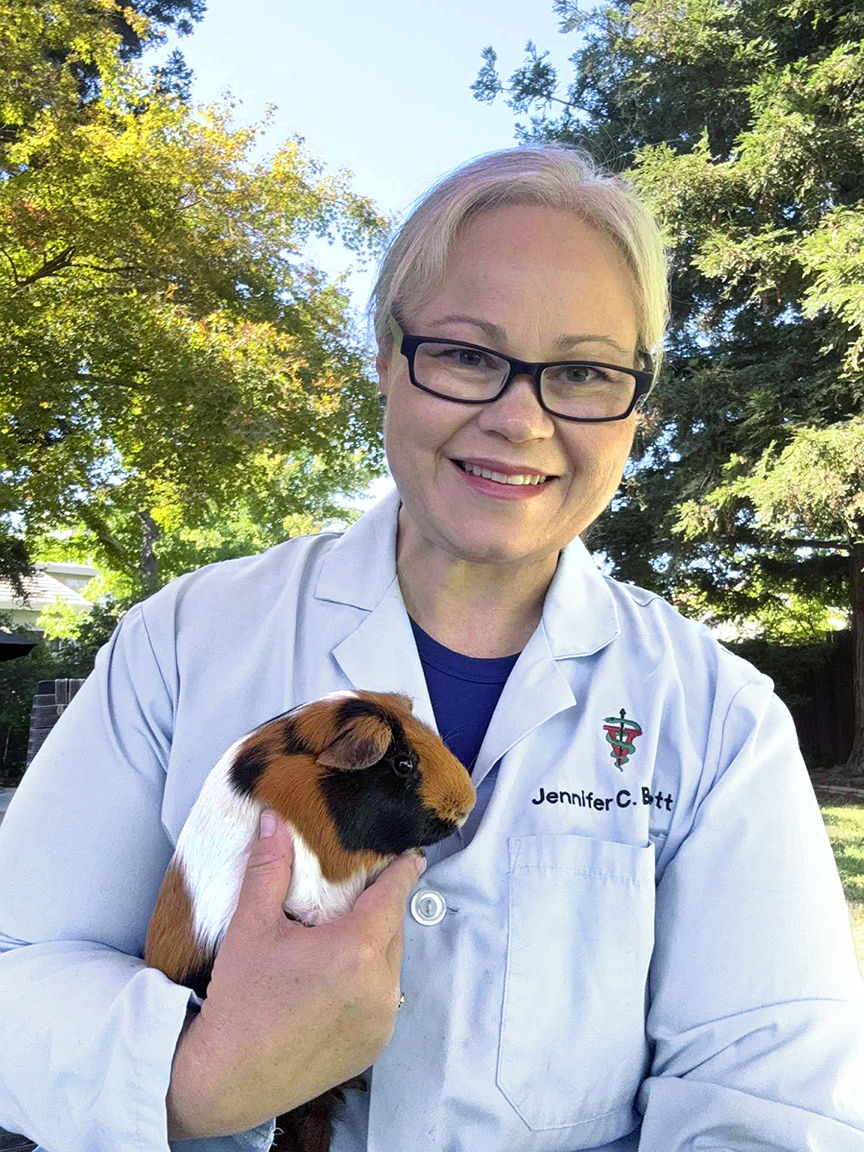
Dr. Jennifer Bennett serves as a veterinarian of record for multiple animal welfare organizations.
The Benefits
Working with animal welfare organizations as a veterinarian of record can bring several benefits to the VOR and the practice.
Practice Growth and Increased Revenue
One of the most tangible benefits to a veterinary practice with a VOR on the team is the potential for new clients referred by the shelter or rescue. When the shelter refers adopters to the VOR’s practice for an initial exam, that can lead to a new client paying full price. It also saves the practice money since it’s easier to retain a client than acquire one, according to Dr. Terry Spencer, director of online learning for Open Door Veterinary Collective.
“There are advantages to working with your local shelter because it’s one client with hundreds of animals,” Dr. Spencer said.
Fresh Perspectives
Working as a VOR can also strengthen the quality of medicine in a practice because working in “herd health” in a shelter environment with large populations of companion animals can
provide a powerful reminder of why things like preventive medications are so important in private practice.
“If it seems kind of rote — how many more boxes of heartworm prevention can you sell in your lifetime? — maybe you should go to the shelter and see why you’re selling that, because half of those dogs are heartworm positive,” said Dr. Spencer. “Or go out and see things to remind yourself why you’re deworming every dog or cat, because there are puppies coming into the shelter dying of hookworms.”
Working in a shelter also drives home the importance of registering a microchip on the day it’s implanted — before the pet leaves the practice — since so many dogs and cats enter shelters with microchips that aren’t registered to the owner and their phone number, Dr. Spencer added.
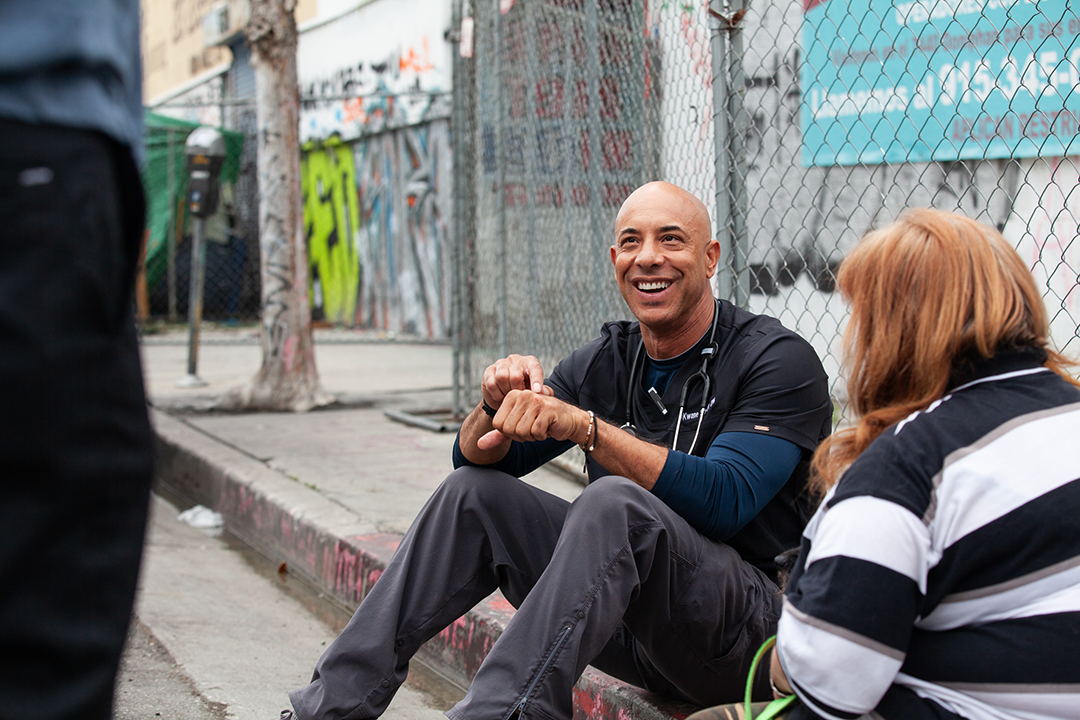
Dr. Kwane Stewart is a champion of the Shelters United VOR Program. Photo courtesy of Chris Mortenson
Improved Well-Being
Another potential benefit to a practice is improved staff well-being, because VORs often feel energized by giving back in a meaningful way. Altruism can be a strong motivator to become a VOR, according to Dr. Kwane Stewart, founder of Project Street Vet, a nonprofit that provides free veterinary care to pets of people experiencing homelessness — for which he was named the 2023 CNN Hero of the Year.
“When you get back to the roots of why you’re doing this, it does motivate you,” he said. “This is a reality check on why we became vets in the first place. There are needy animals out there.”
Working with pets in need reinvigorated Dr. Stewart’s outlook and career at a time when he was feeling burned out and even questioning whether he should continue working as a veterinarian. He finds it personally fulfilling and noted the role also creates opportunities for positive press, such as when a VOR saves the life of a dog who needed surgery to avoid being euthanized. Such newsworthy stories can benefit the VOR and their practice, and keep people thinking about helping local shelters by adopting, fostering, donating, and volunteering.
Dr. Stewart feels that if veterinarians step up as VORs around the country en masse, it could be a “game changer.”
“Every once in a while, you hit an inflection point,” Dr. Stewart said. “You need something new to come along to wake people up, to remind people this is still happening. We’re euthanizing hundreds of thousands of pets in shelters.”
VORs and their practices can also garner gratitude and recognition from the shelters they help, which may promote their work, so the public knows who to thank for helping save the lives of animals in their community.
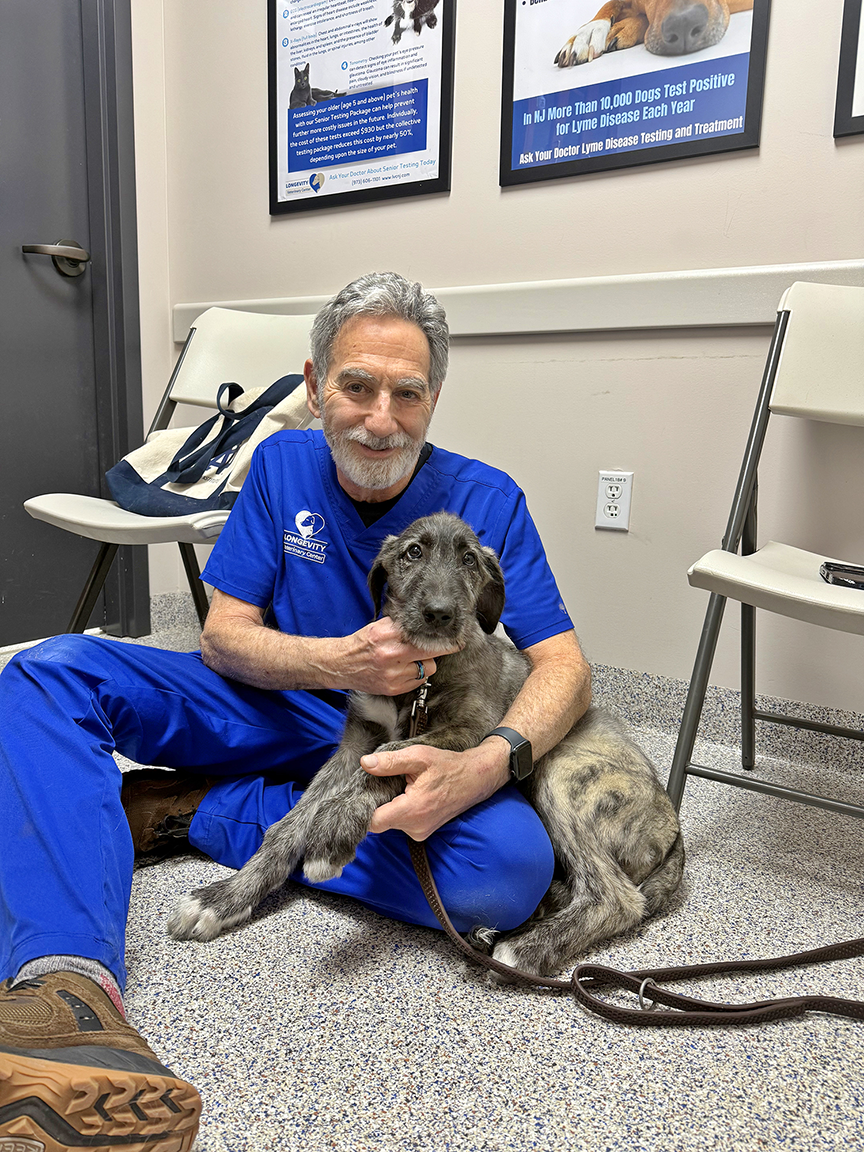
Dr. Gerald Buchoff served as a VOR for over 15 years.
A Tool to Get Involved
To bolster communication and foster successful VOR relationships, Shelters United launched a free online resource for veterinarians and animal welfare organizations: the Veterinarian of Record Program.
The program offers a comprehensive VOR Toolkit with case studies, sample documents, questions to ask when partnering with an animal welfare organization, and other resources. To complement the toolkit, Shelters United also provides a one-hour, RACE-approved online video course.
“The goal is to make a measurable impact on access to veterinary care for these pets that are at the bottom of the barrel when it comes to care,” said Schwartz. “They’re in the greatest need and get the least attention and resources.”
While the Shelters United Veterinarian of Record Program is completely free, there’s a paid option for 20 veterinarians interested in participating in an upcoming pilot project.
In the pilot project, Shelters United will provide “white-glove service” by matching a potential VOR with a shelter or rescue in need and spending at least six months facilitating communication between the two entities to create a mutually beneficial relationship. The VOR pays $2,500 per rescue to Shelters United to participate and agrees to give the shelter a $50 credit for VOR services for each adopter referred for an initial exam at their practice.
The pilot project will also study the VOR’s return on investment by tracking the number of new clients acquired and the corresponding revenue generated through the VOR relationship. Shelters United provides an interactive ROI calculator that projects an increasingly substantial ROI over four years.
Ultimately, Schwartz hopes more veterinarians will consider becoming VORs, as it can be so beneficial to veterinary practices, animal welfare organizations, and the animals themselves.
“There’s just so much opportunity for these folks to earn revenue, do good, and feel good,” he said.
Doing good was a huge motivation to be a VOR for Dr. Gerald Buchoff, founder and owner of Longevity Veterinary Center in Whippany, New Jersey. Dr. Buchoff spent over 15 years as a VOR for the SPCA in Jersey City, where he spent about two days a month examining animals, writing vaccine protocols, and helping the facility maintain its licensing.
It led to new clients, but the biggest reward was giving back in a way that has been a “very important part” of Dr. Buchoff’s career.
“It made me feel like I was part of more than just seeing one animal at a time in my practice,” he said. “I like being part of the community. It’s giving back. I like making a difference.”
“When we were originally asking questions of veterinarians like, ‘What would entice you to be a veterinarian of record?’ people would say aloud, ‘You couldn’t pay me enough to do that.’ And then the shelters would say, ‘No vets will work with us. They’re all just about money,’” said Dr. Terry Spencer, director of online learning for Open Door Veterinary Collective. “It was really bad.”
To document the issues as well as what was working in VOR relationships, Dr. Spencer co-authored the 2024 study “Veterinarian of Record Relationships for Animal Shelters: Differences in Expectations between Veterinarians and Nonveterinarian Shelter Administrators.”
The study was published in the Journal of Shelter Medicine and Community Animal Health. It found that the top factors that motivated veterinarians to serve as VORs were improving animal welfare, helping the community, and providing spay/neuter services. Their primary concerns involved not trusting shelters to follow their veterinary advice or having experienced previous VOR relationships that failed.
By comparison, the primary concerns identified by non-veterinarians at shelters were not being able to afford to retain a VOR and encountering veterinarians who were unwilling to discount their services for nonprofits.
“It didn’t surprise me based on what we were hearing at roundtables, and I was happy to document it because it’s a critical animal welfare issue,” Dr. Spencer said. “Once you’ve lost trust, it’s hard to rebuild it again.”
That’s why Dr. Spencer believes it’s important to outline expectations in writing before entering into a VOR relationship. “Most shelters are doing their best. But if one shelter doesn’t pay its bills and runs up bills at all the vet clinics around town, and then word gets out, that’s when vets go, ‘I don’t trust you,’” Dr. Spencer said. “It’s best to have a written agreement with them. Make it clear: Are you available after hours? Do you have to make an appointment? Don’t let the shelter guess.”
Another common concern involves liability, according to Dr. Jennifer Bennett, director of shelter medicine access to care at UC Davis’ Koret Shelter Medicine Program. But Dr. Bennett contends that liability is similar to working with a practice client — except the shelter is the client. Essentially, if a VOR’s protocols aren’t followed, that’s where the VOR’s responsibility ends, and the shelter’s begins.
“I want to assure veterinarians who are considering this that the liability concerns are assuaged once you have more information about how this partnership works. For example, if you have a protocol that specifies who can do something, how they should do it, and what medications are to be ordered, and the stipulation is that the shelter staff will write in their records something like, ‘Per Dr. Bennett’s protocol, we administered X, Y, and Z,’ that is your legal duty,” she said. “When protocols are followed and documented appropriately, the veterinarian’s role and responsibilities are clearly defined.”