
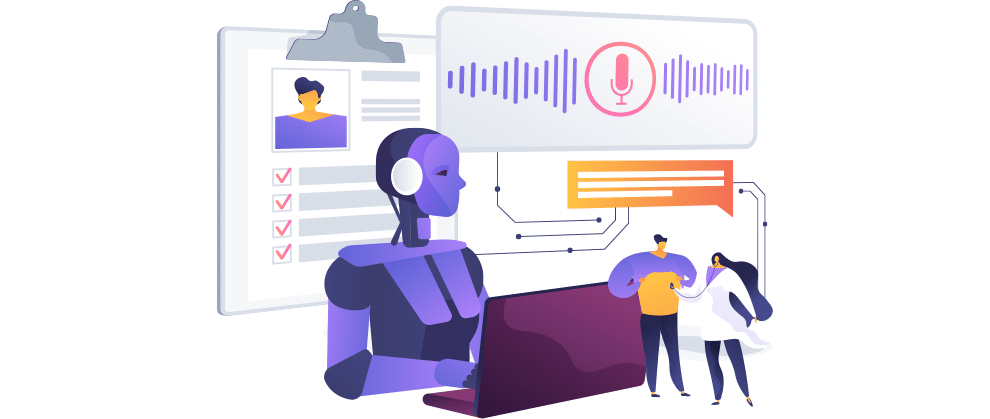
You bought an artificial intelligence scribe. You changed your workflow. You were hoping to spend less time at the computer. So why do your SOAP notes still need so much editing? Usually, the answer is in the transcript. AI scribes use ambient listening — essentially, a microphone capturing what goes on in your appointment — to generate structured medical records from conversation. When the audio is clean, the notes are clean. When it’s not, you have to edit or rewrite from scratch.
Luckily, most of the factors that affect audio quality are within your control, and most cost nothing to implement.
Start Here: Changes That Cost Nothing
The fastest improvements come from adjusting habits and awareness, not from buying equipment. Your team can implement the following five changes today.
1. Close the Door
This is the highest-impact change you can make. AI transcription is reasonably good at filtering background noise, but it performs dramatically better without competing audio from the treatment area, a barking dog in the next room, or a conversation at the front desk. You’re already closing the exam room door behind you when you go into appointments, but consider other doors around you, such as the office door, the treatment door, the pharmacy door — all places you can muffle the clinic noise without a lot of effort.
2. Turn Off the Radio
Ambient music with vocals confuses speaker diarization, which is the software’s ability to distinguish who’s talking. The AI hears lyrics as another voice in the room and tries to attribute words to a speaker. Instrumental music at low volume is generally fine, but vocals at any volume are a risk to transcript accuracy.
3. Notice How You Speak
Dictating while facing away from the mic, mumbling into a patient’s fur during auscultation, or talking over other voices can degrade the quality of the transcript. If you’re not sure a detail was captured, repeat it. That small habit takes seconds and saves minutes of editing time later — the client probably appreciates it as well.
4. Mind Your Mic Placement
If you’re using your phone as the microphone, placement matters more than you think. A phone sitting in your pocket where it’s rubbing against your scrub fabric can create a garbled mess, and a phone on the counter across the room could pick up random ambient noise. The sweet spot is two to three feet from the center of the conversation on an exam table, a countertop, or in a front pocket facing outward.
5. Run a Test Recording
If all else fails, do a trial run. Place your microphone where you’d normally keep it, and record a short test. Have a colleague play the client: Sit where the client sits, speak at a normal volume, and ask a question or two. Move around the room the way you would during an appointment. Crouch down to greet the “patient.”
Play the recording back and listen for where the audio drops off, gets muffled, or picks up competing noise. You’ll hear exactly what your AI scribe hears, and you’ll know what to fix.
Small Investments That Quickly Pay for Themselves
Once your team has the basics down, a few targeted purchases can take audio quality from acceptable to excellent.
1. A Dedicated Conference Microphone
An omnidirectional conference microphone is purpose-built to pick up multiple speakers in an enclosed space. Place one centrally in the exam room, roughly equidistant between you and the client, and you’ll notice an immediate improvement in transcript clarity. Most quality options run between $50 and $150. For a tool that affects every appointment, the return is hard to beat.
2. Acoustic Dampening
Veterinary exam rooms are acoustic nightmares, often with laminate floors, metal tables, and plaster walls.
Every surface reflects sound. You can’t turn an exam room into a recording studio, but you don’t need to. A rubber mat on the exam table cuts a major reflective surface while also preventing patients from slipping. A bulletin board with client education materials on a bare wall absorbs some echo. Acoustic panels are ideal if you’re doing a build-out, but even low-cost soft surfaces make a meaningful difference.
3. Lapel Mics for Mobile Workflows
If your workflow takes you from the exam room to the X-ray table to the treatment area, a lapel mic lets the recording travel with you. Higher-quality models capture your voice and nearby conversation well. Lower-quality lapel mics tend to produce a lopsided transcript, where your words are crisp but your client’s words are muffled. Field test any model before relying on it in practice. The best setup for most clinics is a combination of a stationary mic for the exam room and a mobile option for everything else.
4. Ceiling-Mounted Microphones for Permanent Installs
Practices investing in new construction or major renovations should consider ceiling-mounted microphones. They’re out of the way, less likely to be damaged or soiled, and provide consistent coverage across the room. This is the highest-cost option but also the most set-it-and-forget-it solution for practices committed to long-term AI documentation.
Client Consent: Do This Before You Hit Record
If your AI scribe is recording audio in the exam room, be sure to tell your clients. In many states, you’re legally required to. But legal minimums aside, this is a trust issue.
The good news is that AI scribing is becoming increasingly common in human medicine, and most clients are already familiar with the concept. Make consent part of your intake workflow: Add a line to your intake paperwork about scribing, post signage at check-in and in exam rooms for extra visibility, and make sure that your front desk staff can explain it in one sentence if someone asks.
One important note: One-party versus two-party consent laws vary by state. Check with your practice’s legal counsel or consult American Veterinary Medical Association resources to confirm that your intake paperwork, signage, and verbal protocols meet the legal standards in your jurisdiction.
For the verbal component, keep it casual and brief: “I use an AI assistant that listens during our conversation to help me write your pet’s medical notes. Is that OK with you?” In several years of using an AI scribe, I’ve had maybe three clients decline. Most people are relieved to hear you’ll be paying full attention to their pet instead of typing.
Ambient Listening Forms the Foundation for Future Innovations
Right now, your AI scribe is a listener and a note-taker — it hears the appointment and writes the record. But the technology isn’t going to stay passive for long.
The next generation of AI in veterinary medicine will move from listening to doing. Instead of simply documenting what happened, AI will act for you by:
- Generating callback reminders from a recheck discussion
- Pre-populating prescriptions in your PIMS
- Sending clients follow-up summaries with care instructions
That future starts with clean audio and a well-configured room. The practices investing in good ambient listening habits today are the ones best positioned to benefit as these tools grow more capable.
The Bottom Line
AI scribes are a useful tool for reducing documentation burden, but they’re only as good as the environment you put them in. A few minutes spent on mic placement, room acoustics, and a clear consent protocol will save you hours of frustration and produce notes you can trust. The technology is ready. Make sure your clinic is, too.