
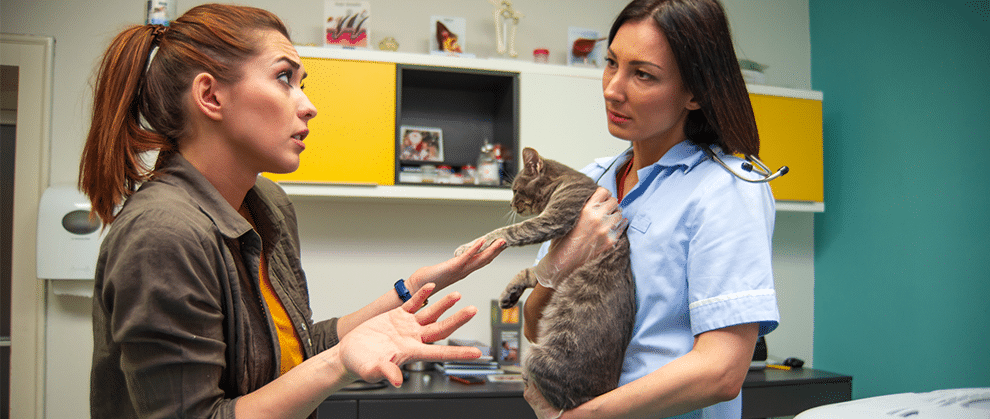
Six months can feel like a lifetime in a busy veterinary practice, especially when you’re the client during those six months. My dog, Bella, tore her cranial cruciate ligament in 2025. We navigated the diagnosis, the surgery conversation, the recovery plan, the meds, the rehab exercises, and the “What’s normal?” versus “What’s urgent?” questions. Then, six months later, she tore the other CCL. Same dog. Same practice. Same long drive across the state.
The only difference was the doctor. Or so I thought.
My reality the second time around was different. The answers to my questions varied, depending on whom I spoke with. The discharge notes were slightly different, which ultimately led me to stop trusting the plan. I felt uneasy, started double-checking everything, and found myself comparing old notes to new ones. I asked more questions. I researched more. I noted every detail more closely. How could two seemingly similar surgeries leave me so confused?
The bright side was that Bella fully recovered from both surgeries.
Looking back now, I realized something easy to miss when you’re working in a veterinary practice every day: Clients perceive their visits differently when your clinic’s processes change based on who happens to be working on a particular day.
My two distinct experiences highlighted the power of consistency within a practice and adherence to standard operating procedures. Don’t confuse SOPs with bureaucracy. Rather, consider them a visible promise of what clients and team members can count on.
Standardization isn’t about making people robotic; it’s about reducing preventable variation. In a veterinary study on setting up anesthesia equipment, introducing a checklist was associated with an 88% reduction in errors. Other benefits included fewer delays, corrections, and “drop everything” moments, and less stress on team members.
Below are five high-impact SOP areas where proven processes can improve client and employee retention and the bottom line.
1. Client-Facing SOPs
One standard operating procedure should include discharge templates for each medical procedure. Include when the client should contact your practice or rush the patient to an emergency hospital. Your practice management software is capable of a lot of things, so utilize it. Not only will templates save you time, but they will also bring consistency to the client experience. Unification is key when you have multiple doctors with different opinions.
The follow-up should also be the same. In my case, the first veterinarian asked me to send a photo of the incision and a video of Bella walking, after which the doctor called to follow up. After the second surgery, I received a simple phone call asking how she was doing. Bella seemed fine, but didn’t they need to see her walking? Was she limping too much, or was she progressing properly? (Interestingly enough, ChatGPT offered to review the incision if I uploaded a photo.)
Veterinary practices can perform excellent medicine but still bleed revenue through poor call handling. You should have SOPs for when someone calls to schedule an appointment, for price shoppers, for emergencies, for callbacks, and so on.
Scripts are a great way to train your staff to be consistent. Consider scripts that address new clients, sick pet triage, fee questions, euthanasia inquiries, and callbacks.
The first time, I received a text message with a photo of Bella’s post-op X-ray and a short note that the surgery went well and that she would be available for pickup three hours later. You wouldn’t believe how much that communication meant to me. The second time, a technician called to say Bella did great and could go home in three hours. I felt relief, but also disappointment because I had looked forward to a photo.
2. Team-Facing SOPs
Given the profession’s high employee turnover, creating calmer, clearer onboarding is not only a must, but a necessity. Training checklists are especially effective when designed by skills or level. (Check out my article “How to Level Up Your Team”) Your standard operating procedures can include what “good” looks like in specific roles at 30, 60, and 90 days. Furthermore, consider creating a buddy system or mentorship program, and if you have a large team, a trainer position might be important.
When it comes to the laboratory and imaging, workflows are where delays, missing labels, and rework happen. Your SOPs should include sample labeling rules, storage requirements, a send-out packaging checklist, and an imaging handoff checklist. Checklists are consistently associated with reduced errors and improved reliability within complex systems.
Surgery days can be smooth and profitable. Or they can be chaotic, late, and stressful. Develop SOPs outlining a pre-op checklist, anesthesia equipment setup, recovery monitoring standards, and discharge timing. Determine communication checkpoints with the client before, during, and after surgery.
But wait, there’s more! Consider developing standard operating procedures for room flow, kennel cleaning, surgery packs, and so on. And think about inserting short videos or a picture tutorial for illustration purposes.
3. Finance and Risk SOPs
Inventory is often the second-largest cost in a veterinary practice after payroll. Weak processes lead to shrinkage, stockouts, expired medications, and compliance risks. Basic SOPs should include:
- Who receives shipped products
- How invoices are confirmed
- How, where, and by whom products received are recorded
- How to handle discrepancies
Also consider standard operating procedures covering cycle counts, expiration management, reorder points, and controlled drug logs.
4. Invoices and Charges
Write a standard operating procedure for accepting client payments, issuing refunds, and voiding transactions. What might seem straightforward to you could be a mystery to team members, especially new employees. Investing time in a proper setup will pay you back in efficiency and fewer missed charges.
Pay attention to recurring questions and repeated errors. Take, for example, multiple exam fees. Does your team know what to charge and when?
5. End-of-Day SOPs
Reconciling the business day is critical. Run an end-of-day cash report from your practice management system and confirm that all appointments were accounted for and invoiced. Count your cash and checks daily and reconcile them to the PIMS report. Investigate any differences. Also, double-check the totals for other payment methods. Complete a daily deposit slip, and secure cash and checks in the designated safe or deposit bag. (Remember that no one person should handle cash and post adjustments.)
Don’t let perfection get in the way of good. After Bella’s second injury, I didn’t expect perfection. I wanted consistency, predictable follow-up, understandable discharge instructions, and a team that felt aligned. That’s what good SOPs create.
For clients, standard operating procedures reduce uncertainty and increase compliance. For teams, SOPs reduce the mental workload, rework, conflict, and burnout. And for practice owners, SOPs protect the bottom line by reducing errors, improving capacity, boosting retention, and enabling smoother operations.